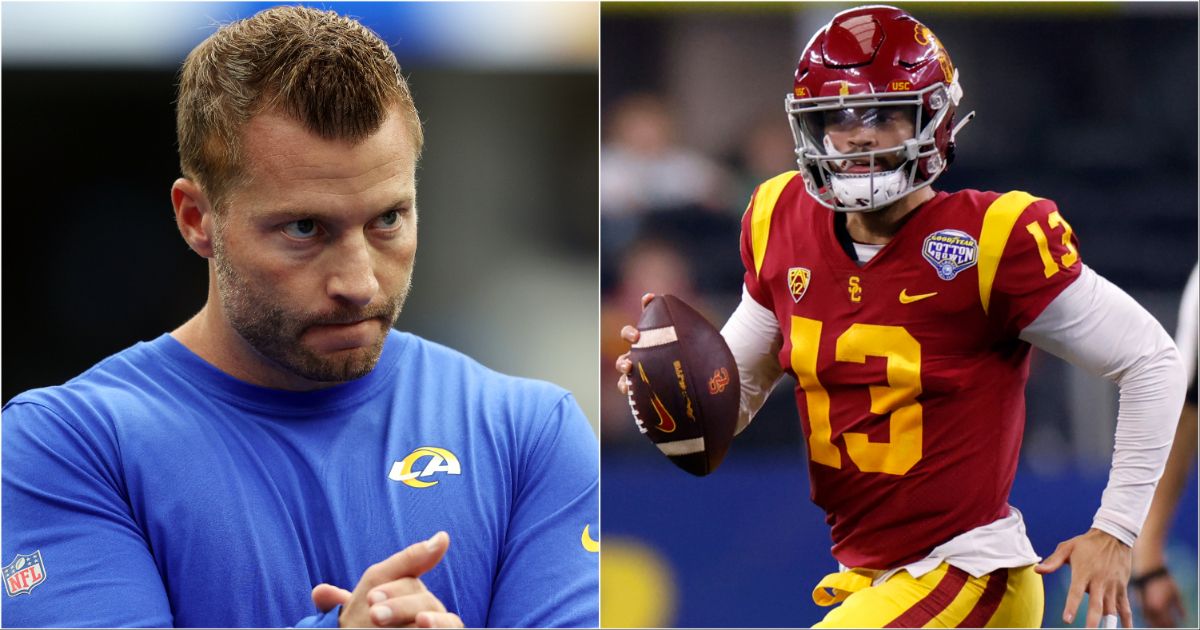
The Los Angeles Rams didn’t just make a pick in the 2024 NFL Draft—they executed a calculated maneuver rooted in film study, quarterback scarcity, and draft capital efficiency. At the center of the narrative is Albert Breer, one of the league’s most trusted insiders, whose takeaways revealed how the Rams ended up selecting Oregon quarterback Ty Simpson. While Simpson wasn’t the most publicized name on draft boards, Breer’s reporting peeled back the layers of L.A.’s decision-making, exposing a process that prioritized upside, fit, and board discipline over pedigree.
The Rams’ quarterback room was thin. Matthew Stafford, still the starter, is nearing the end of his prime. Stetson Bennett, the 2023 rookie, showed flashes but lacked the developmental runway the team wanted. With no internal heir apparent and minimal margin for error under Sean McVay, the Rams needed a high-upside project—someone with the athleticism, arm talent, and moldability to survive the McVay system. Enter Ty Simpson.
Breer emphasized that this wasn’t a reactionary pick. It was the outcome of months of internal evaluation, pro-day visits, and private workouts. The Rams didn’t fall in love with Simpson overnight. They mapped him against a tiered quarterback model—one that factored in physical tools, football IQ, and intangibles like coachability and competitive temperament.
Why Ty Simpson Made the Rams’ Board
Albert Breer reported that Simpson’s performance at Oregon’s pro day was the tipping point. While his collegiate stats were modest—partially due to playing behind Bo Nix—Simpson showcased a 4.49-second 40-yard dash, a 38-inch vertical, and a series of deep throws that mirrored NFL-ready mechanics. More importantly, his command during scripted drills impressed Rams evaluators.
Breer noted that Simpson’s ability to process defensive looks quickly stood out. In a league where the Rams rely heavily on pre-snap motion and quarterback cadence, mental processing is non-negotiable. Simpson’s film from limited starts showed he didn’t panic under pressure—a trait McVay values more than raw production.
The Rams’ quarterback profile has evolved. They no longer seek pure pocket passers. They want mobile operators who can extend plays and function in rhythm-based systems. Simpson’s agility and escapability fit that mold. At 6’2”, 210 pounds, he has the frame to add muscle and withstand NFL hits—a physical projection that aligns with long-term durability.
The Draft Night Chess Match
According to Breer, the Rams entered draft weekend with a clear drop chart. They had Simpson pegged as a fourth-round talent but feared a run on quarterbacks in the third. Teams like the Patriots, Vikings, and Broncos were all linked to developmental arms. The Rams knew hesitation could cost them their target.
Breer detailed how the Rams engaged in quiet trade discussions early in Day 3. They were willing to move up from pick No. 129 but only within a defined range—No. 100 to No. 115. When no suitable offers materialized, they stayed put, trusting their board.

Then, with the 113th pick, Simpson was still on the board. Breer described it as a “relief moment” in the Rams’ war room. Multiple teams had inquired about moving up, but none pulled the trigger. The Rams pounced, selecting Simpson with precision timing.
This wasn’t luck. It was board discipline. As Breer often highlights, successful drafting isn’t about grabbing headlines—it’s about sticking to a plan when others panic. The Rams avoided reaching, didn’t overvalue hype, and stayed aligned with their internal grading.
How the Rams’ System Shapes Their Draft Choices
Sean McVay’s offense demands more than arm strength. It requires rhythm, timing, and the ability to quickly identify leverage advantages. Breer pointed out that the Rams’ scouting staff evaluates quarterbacks through a “system fit” lens first, then upside potential.
Simpson’s college experience in a pro-style, RPO-heavy offense at Oregon gave him a foundation. He ran mesh concepts, slant-flat progressions, and boot-action looks—many of which mirror McVay’s base packages. That familiarity reduces the learning curve.
Additionally, the Rams use a “quarterback development tree” that maps out Year 1 to Year 3 expectations. Breer revealed that Simpson’s projected path includes:
- Year 1: Mastering the playbook, situational awareness, and backup reps
- Year 2: Participating in preseason games, leading two-minute drills
- Year 3: Competing for a starting role if Stafford steps away or Bennett stalls
This structured approach prevents rushed promotions and allows raw talent to mature—something Breer praised as a shift from past NFL developmental failures.
The Role of Private Workouts and Medicals
One of Breer’s lesser-discussed but critical takeaways was the importance of Simpson’s private workout with the Rams. Unlike pro day performances, which are scripted, private sessions allow teams to test specific concerns. The Rams put Simpson through off-schedule throws, red-zone reads, and pressure simulations.
He aced them. More importantly, his medical evaluation came back clean. A prior shoulder concern from his freshman year had teams asking questions, but updated imaging showed no structural issues. Breer noted that the Rams’ medical staff gave Simpson a “green light” with no red flags—making him a safer developmental bet than some higher-profile names with injury histories.
This behind-the-scenes diligence is what separates informed drafting from gambling. The Rams didn’t just fall for athleticism. They validated durability, recovery mechanics, and long-term viability.
Comparing Simpson to Recent Rams Draft Picks
To understand the Rams’ strategy, it helps to compare Simpson to recent quarterback selections. Jared Goff was a top-tier talent but came with high expectations and immediate pressure. John Wolford was a late-round flier with limited upside. Bennett was a raw project with unclear traits.
Simpson sits in a sweet spot: high athletic ceiling, clean injury history, and a coachable demeanor. Breer likened him to a blend of Jalen Hurts’ resilience and Jordan Love’s developmental arc—high-risk, high-reward, but with a better long-term fit for McVay’s structure.
Here’s a breakdown of recent Rams QB picks for context:
| Player | Round | Draft Year | Career Trajectory | Fit with McVay System |
|---|---|---|---|---|
| Jared Goff | 1 | 2016 | Starter → Backup | Moderate (system evolved) |
| John Wolford | UDFA | 2018 | Emergency starter | Limited |
| Stetson Bennett | 5 | 2023 | Developmental | Partial (accuracy issues) |
| Ty Simpson | 4 | 2024 | Project | High (traits align) |
Simpson’s fourth-round selection also reflects smarter capital allocation. The Rams avoided expending a high pick on a developmental quarterback, preserving resources for defense and offensive line—a balance Breer has long advocated.
Why Other Teams Passed on Simpson
Breer addressed a key question: If Simpson was such a strong fit, why wasn’t he taken earlier?
The answer lies in evaluation divergence. Some teams viewed Simpson as a “tweener”—too raw to start, too limited in college usage to project as a franchise guy. Others preferred quarterbacks with more starts or pro-style experience.
Additionally, Simpson’s decision to enter the draft after only one partial season as Oregon’s starter raised eyebrows. Teams like the Bills and 49ers, who value proven production, passed. The Rams, however, prioritized traits over resume—something Breer called a “modern drafting advantage.”
Teams with established quarterbacks also had less urgency. The Rams, sitting at the edge of a potential transition, needed to plan ahead. Breer emphasized that window-thinking separates contenders from also-rans. L.A. isn’t rebuilding—they’re recalibrating.
What the Future Holds for Simpson
Simpson won’t start in 2024. But Breer’s reporting suggests he’ll be more than a clipboard carrier. Expect him to compete with Bennett for the QB2 role and participate in situational packages—possibly even gadget plays that leverage his speed.
The Rams have a history of developing backup quarterbacks into assets. Wolford became a valuable emergency option. Goff’s trade netted significant draft capital. Simpson could follow a similar path—either as a future starter or a valuable trade chip.
Moreover, the presence of Stafford provides an ideal mentorship environment. Breer noted that Stafford has taken young quarterbacks under his wing before, including Jared Goff early in his career. Simpson will absorb film, practice habits, and leadership cues from a Super Bowl-winning QB.
The Bigger Picture: Rams’ Roster Strategy
Breer’s takeaways extend beyond one pick. The Simpson selection reflects a broader Rams philosophy: invest in high-upside, low-cost players while relying on established stars to carry the win-now load.
This approach balances sustainability with competitiveness. The Rams aren’t mortgaging the future, but they’re not ignoring it either. With cap constraints looming, drafting players like Simpson—affordable, controllable, and scalable—makes financial and football sense.
It’s a model other teams should study. Rather than swinging for the fences on a Day 1 starter, the Rams are building depth with athletes who fit their system and culture. Breer called it “quietly aggressive”—a draft strategy that doesn’t make headlines but wins games over time.
Final Takeaway: The Rams’ selection of Ty Simpson wasn’t a gamble—it was a disciplined, insight-driven decision validated by Albert Breer’s reporting. From pro-day performance to medical clearance to system fit, every box was checked. For fans and analysts alike, the lesson is clear: elite drafting isn’t about chasing stars. It’s about finding the right player at the right time, with the right plan. The Rams did exactly that.
Frequently Asked Questions
Why did the Rams pick Ty Simpson in the fourth round? The Rams saw high upside in Simpson’s athleticism, mental processing, and system fit. They believed his traits outweighed his limited college starts, making him a value pick in the fourth round.
Did Albert Breer predict the Rams would draft Simpson? Breer didn’t predict the pick outright but reported that Simpson was on L.A.’s short list and that the team was actively evaluating developmental QBs.
How does Ty Simpson fit Sean McVay’s offense? Simpson’s mobility, quick decision-making, and experience in a pro-style offense align well with McVay’s rhythm-based system and use of play-action and bootlegs.
Is Ty Simpson expected to start soon? No. He’s viewed as a developmental project. His immediate role is to learn behind Matthew Stafford and compete with Stetson Bennett for the backup spot.
What were the Rams’ main concerns with Simpson? Limited college starts and questions about his consistency under pressure. However, his pro day and private workout alleviated most of those concerns.
How does Simpson compare to other rookie QBs? He’s less polished than top-tier rookies but offers higher athletic upside than many late-round picks. His profile resembles a blend of Jordan Love and Anthony Richardson, minus the draft hype.
Could the Rams trade Simpson in the future? Yes. If he develops well, he could become a trade asset—similar to how Jared Goff was traded to the Lions for draft picks.
FAQ
What should you look for in Albert Breer’s NFL Draft Takeaways: How the Rams Landed Ty Simpson? Focus on relevance, practical value, and how well the solution matches real user intent.
Is Albert Breer’s NFL Draft Takeaways: How the Rams Landed Ty Simpson suitable for beginners? That depends on the workflow, but a clear step-by-step approach usually makes it easier to start.
How do you compare options around Albert Breer’s NFL Draft Takeaways: How the Rams Landed Ty Simpson? Compare features, trust signals, limitations, pricing, and ease of implementation.
What mistakes should you avoid? Avoid generic choices, weak validation, and decisions based only on marketing claims.
What is the next best step? Shortlist the most relevant options, validate them quickly, and refine from real-world results.