More than 200,000 students have walked through an Ivy Tech Community College campus in the last decade. For many, it’s the most practical path to a degree, certification, or career change—especially across rural and suburban Indiana where access to higher education is limited. With over 70 physical locations spanning 40+ counties, Ivy Tech isn’t just widespread—it’s embedded in the communities it serves. But with so many options, choosing the right campus can be overwhelming. This guide cuts through the noise, offering a detailed breakdown of Ivy Tech’s location network, what each major campus offers, and how to pick the one that aligns with your goals.
Why Ivy Tech’s Location Network Matters
Ivy Tech isn’t a traditional college with one main campus. It operates as a decentralized system designed for accessibility. That’s intentional. Indiana has pockets of economic stagnation, aging manufacturing sectors, and workforce gaps—all areas where Ivy Tech steps in with targeted training and education.
The real power of Ivy Tech lies in its hyper-local presence. Instead of expecting students to relocate or commute for hours, campuses are often within 30 miles of 90% of Indiana’s population. This proximity reduces transportation barriers, supports working adults, and strengthens local economies through skilled labor pipelines.
But it’s not just about geography. Each location tailors programming to regional job markets. For example:
- The Fort Wayne campus emphasizes advanced manufacturing and logistics, aligning with Northeast Indiana’s industrial base.
- The Indianapolis (Indianapolis–Colvin Avenue) location focuses on healthcare, IT, and public safety.
- The Evansville campus partners with Deaconess and Ascension hospitals for nursing clinicals.
Choosing a location isn’t just about convenience—it’s about aligning your education with real job opportunities nearby.
Major Ivy Tech Campuses and What They Offer
While Ivy Tech has learning centers in smaller towns (like Jasper, Winchester, or Rensselaer), the larger campuses offer more programs, on-site labs, and student services. These hubs serve as regional anchors.
Indianapolis–Colvin Avenue Campus
As the largest single location, the Colvin Avenue campus in Indianapolis is a full-service hub. It houses:
- Nursing simulation labs with high-fidelity manikins
- Cybersecurity and networking labs
- Fire and emergency response training center
- On-site testing for certifications (CompTIA, Cisco, etc.)
Students here benefit from proximity to major employers like Eli Lilly, Salesforce, and IU Health. Many programs include guaranteed internship placements.
Pro tip: If you're pursuing associate degrees in IT or healthcare, Indianapolis often has the earliest class start dates and most cohort options.
Fort Wayne Campus
Northeast Indiana is a manufacturing and logistics powerhouse. The Fort Wayne campus reflects that:
- Mechatronics and robotics labs
- Supply chain management programs with real-world simulations
- Aviation maintenance training (in partnership with Fort Wayne International Airport)
This campus also hosts the Ivy+ Accelerated Skills Program, which lets students earn credentials in under a year—perfect for career-changers or displaced workers.
South Bend Campus
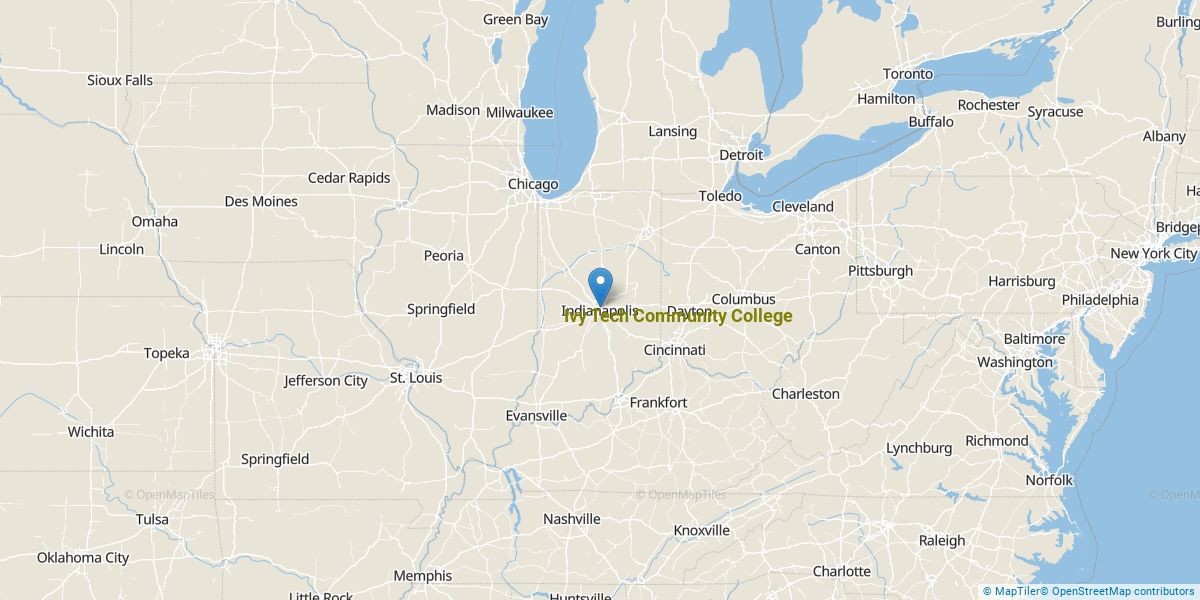
Located near the Indiana-Michigan border, South Bend serves a mix of urban and rural students. Its standout features:
- Strong automotive technology program (supports local St. Joseph County auto shops)
- Teacher preparation pathway for early childhood education
- On-site childcare for student parents
South Bend also has one of the highest transfer rates to four-year schools like Indiana University South Bend.
Evansville Campus
Situated along the Ohio River, Evansville’s economy leans heavily on healthcare and transportation. The campus delivers:
- Clinical partnerships with regional hospitals
- Diesel technology program with job placement support
- Dual credit opportunities for local high school students
Its downtown location also makes it a cultural access point, with regular community events and career fairs.
Lafayette Campus
Serving the Wabash Valley region, Lafayette offers:
- Agriculture and precision farming technology courses
- Engineering transfer pathways to Purdue University
- Welding and industrial maintenance labs
Its proximity to Purdue enhances articulation agreements—students can start at Ivy Tech and transfer seamlessly.
Smaller Learning Centers: Access Without the Noise
Not every student needs a full-service campus. Ivy Tech’s smaller learning centers—often located in repurposed retail spaces, community centers, or shared government buildings—provide core services with fewer distractions. Examples include:
- Greensburg Learning Center: Offers nursing prerequisites and business courses, with evening-only schedules for working adults.
- Jasper Campus: Focuses on manufacturing and trades, supporting Dubois County’s strong industrial base.
- Terre Haute–West Vigo: Emphasizes dual credit and GED completion for high school students.
These centers typically offer:
- Hybrid or online-hybrid classes
- Testing centers (proctored exams, certification testing)
- Academic advising and financial aid help
Common mistake: Students assume smaller centers mean lower quality. That’s false. Faculty are the same system-wide, and credits transfer seamlessly. The difference is in available labs and face-to-face course frequency.
How to Choose the Right Ivy Tech Location for You
Location choice impacts more than commute time. It affects your access to:
- Specific programs
- Hands-on labs
- Internships and job placements
- Support services (tutoring, childcare, disability resources)
Use this decision framework:
1. Match Your Program to Campus Strengths
Not all campuses offer every program. For example:
- Nursing: Available at 15+ campuses, but clinical rotations vary by hospital partnerships.
- Cybersecurity: Only offered at Indianapolis, Fort Wayne, and Columbus.
- Cosmetology: Limited to Evansville, Kokomo, and Lafayette.
Check the Ivy Tech program finder and filter by campus.
2. Consider Class Format and Schedule
- Full campuses offer morning, afternoon, evening, and weekend classes.
- Smaller centers often have limited evening offerings.
- Online options are available system-wide, but some labs (e.g., chemistry, welding) require in-person attendance.
If you work full-time, prioritize locations with late-night or hybrid options.
3. Evaluate Support Services
Ask each campus:
- Is there on-site tutoring?
- Do they offer career coaching?
- Is there accessible parking or public transit?

Indianapolis and Fort Wayne have the most robust student support teams. Rural centers may require virtual appointments.
4. Test the Commute
Use Google Maps to simulate your drive during rush hour. A 25-minute drive might become 45 during peak traffic. If commuting becomes a burden, consider online courses—even at physical campuses, most programs allow partial remote attendance.
Online Learning and Hybrid Options Across Locations
While Ivy Tech has physical locations, over 60% of students take at least one online course. The system uses Brightspace (D2L) for course delivery, and most programs support hybrid enrollment.
For example:
- An Associate in General Studies can be completed entirely online.
- IT and Business programs offer asynchronous coursework with in-person certification exams.
- Health sciences require clinical hours but allow lecture components online.
Each campus supports online learners by providing:
- Free laptop checkout
- Wi-Fi hotspots for loan
- Remote academic advising
You don’t have to live near a campus to benefit from Ivy Tech—but if you do, you gain access to labs, networking, and employer events.
Workforce Partnerships and Job Placement by Region
Ivy Tech doesn’t operate in a vacuum. Each campus partners with regional employers to shape curriculum and place graduates.
Examples:
- Columbus Campus: Partnered with Cummins Inc. to train diesel technicians. Students often receive job offers before graduation.
- Muncie Campus: Works with Ball State University and local schools to place early childhood educators.
- Gary Campus: Collaborates with United Steelworkers and local manufacturers for apprenticeship pipelines.
These partnerships mean location directly affects job prospects. A welding graduate in Gary may find work at a steel plant, while one in Bloomington might land with a construction contractor.
Workflow tip: Attend employer info sessions hosted at your campus. They’re low-pressure and often lead to interviews.
Transferring Credits and Moving Between Campuses
Life changes. You might start in Anderson but transfer to Terre Haute for family reasons. Good news: Ivy Tech treats all campuses as one system.
- Credits transfer seamlessly between locations.
- Academic advisors coordinate across regions.
- Student records are centralized.
However, some programs have capacity limits. If you’re in a high-demand field like nursing, transferring into a full cohort may require waiting for the next intake.
Always contact the target campus advisor before relocating. They’ll confirm program availability and help you adjust your academic plan.
Final Recommendations: How to Get Started
Choosing an Ivy Tech location shouldn’t be complicated. Here’s what to do next:
- Identify your goal: Degree, certification, or skill upgrade?
- Find programs that match: Use the Ivy Tech website to filter by interest.
- Check campus availability: Verify the program is offered nearby.
- Visit or schedule a tour: Even a virtual tour helps you assess fit.
- Talk to an advisor: They’ll clarify scheduling, costs, and support.
Don’t let geography limit you—use it to your advantage. The right Ivy Tech location isn’t just close to home. It’s close to your future job.
Frequently Asked Questions
What is the largest Ivy Tech campus? The Indianapolis–Colvin Avenue campus is the largest in terms of student enrollment, facilities, and program variety.
Can I take classes at multiple Ivy Tech locations? Yes. Students can enroll in courses at any campus or online, regardless of their home location.
Are all Ivy Tech campuses open to the public? Most campuses have public access during business hours, though labs and testing centers may require appointments.
Does Ivy Tech have campuses in rural areas? Yes. Ivy Tech operates learning centers in rural counties like Pulaski, Perry, and Orange to improve access.
How do I find the nearest Ivy Tech location? Use the campus locator tool on ivytech.edu/locations by entering your zip code.
Do smaller campuses offer the same quality of education? Yes. Curriculum, faculty standards, and accreditation are consistent across all locations.
Can I start online and switch to in-person later? Absolutely. Many students begin online and transition to a physical campus when ready.
FAQ
What should you look for in Ivy Tech Community College Locations: A Complete Guide? Focus on relevance, practical value, and how well the solution matches real user intent.
Is Ivy Tech Community College Locations: A Complete Guide suitable for beginners? That depends on the workflow, but a clear step-by-step approach usually makes it easier to start.
How do you compare options around Ivy Tech Community College Locations: A Complete Guide? Compare features, trust signals, limitations, pricing, and ease of implementation.
What mistakes should you avoid? Avoid generic choices, weak validation, and decisions based only on marketing claims.
What is the next best step? Shortlist the most relevant options, validate them quickly, and refine from real-world results.