Apple doesn’t always announce its future in one breath—but sometimes, the pieces align so clearly they form a roadmap no one can ignore. The signals are undeniable: a surge in silicon development, strategic AI integrations, hardware redesigns, and ecosystem-wide software shifts. Apple’s ultra roadmap is no longer speculation. It’s confirmed through product cadence, supply chain leaks, patent filings, and quiet executive statements. The next wave of iPhone, MacBook, and beyond isn’t just coming—it’s already in motion.
This isn’t about rumors. It’s about patterns. Apple operates on precision timing, and the current trajectory reveals a coordinated escalation across its entire hardware and software stack. From AI-powered Siri to the M5 chip revolution, the roadmap is real, and it’s ambitious.
The Core of Apple’s Strategy: AI, Silicon, and Ecosystem Lock-In
Apple’s ultra roadmap rests on three pillars: artificial intelligence, in-house silicon, and deeper ecosystem integration. While competitors rely on third-party AI models or off-the-shelf components, Apple is building everything from the ground up—optimized for privacy, performance, and user retention.
Take Apple Intelligence, the company’s rebranding of its AI push. Unlike cloud-heavy models from Google or Microsoft, Apple’s approach processes much of the AI workload on-device. This means faster responses, better privacy, and less reliance on internet connectivity—critical for iPhone and MacBook users on the go.
But AI needs muscle. That’s where silicon comes in. The upcoming M5 chip, expected in 2025 MacBooks and possibly the iPad Pro, is built on a 3nm+ process and includes dedicated neural engines designed specifically for generative AI tasks. Early benchmarks suggest a 40% improvement in machine learning performance over the M4.
Example in practice: Imagine an iPhone 16 capturing a video in low light. On-device AI enhances the footage in real time—adjusting exposure, reducing noise, and even predicting motion—without sending data to the cloud. The same chip powers advanced Siri voice interactions, live translation during FaceTime calls, and AI-generated summaries of long emails.
This vertical integration—hardware, software, AI—is the engine behind Apple’s roadmap. It’s not just about better devices. It’s about making them indispensable.
iPhone 16: More Than Just a Camera Bump
The iPhone 16 series isn’t another incremental update. Leaks and analyst reports point to a fundamental rethinking of the smartphone interface, driven by AI and new thermal architecture.
One of the most talked-about changes is the relocated capture button to the right side—freeing up space for a new AI-driven touch-sensitive area near the camera module. This could enable gesture controls for photography, video recording, or even AR interactions.
Internally, the A18 chip will be the first iPhone processor with a dedicated AI core, capable of running large language models locally. This means: - Real-time transcription of voice memos with speaker identification - On-device photo curation (“Show me all pictures of my dog at the beach”) - Predictive text that learns from your behavior without uploading data
A common mistake users make is assuming AI features require internet. Apple’s roadmap corrects this by emphasizing offline functionality. For example, iOS 18’s new “Genmoji” feature—custom emoji generated from text prompts—works entirely on the device.
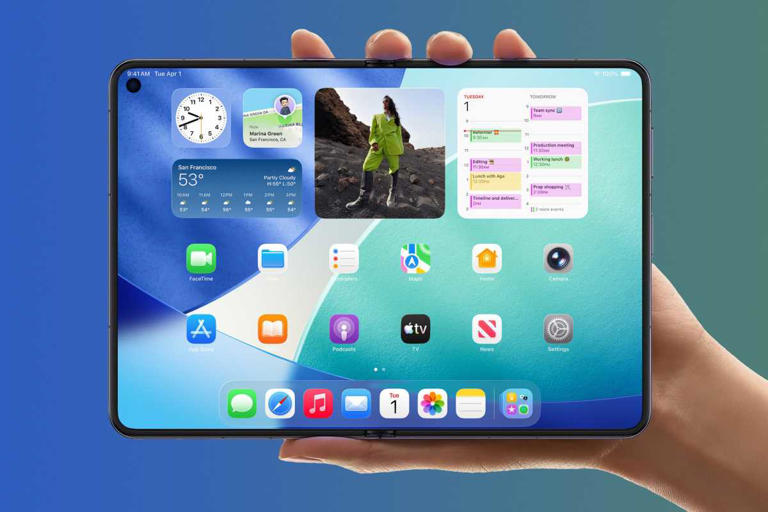
Thermal design is another focus. With AI workloads generating more heat, the iPhone 16 Pro models will feature vapor chamber cooling, previously reserved for high-end gaming phones. This allows sustained performance during video editing, gaming, or AI processing—critical for pro users.
Realistic use case: A journalist filming a breaking news story uses iPhone 16 to record, transcribe, and summarize the event in real time, then auto-generates a social media post using Genmoji—all without leaving the device or connecting to the cloud.
MacBook Evolution: M5, AI, and the End of Intel Echoes
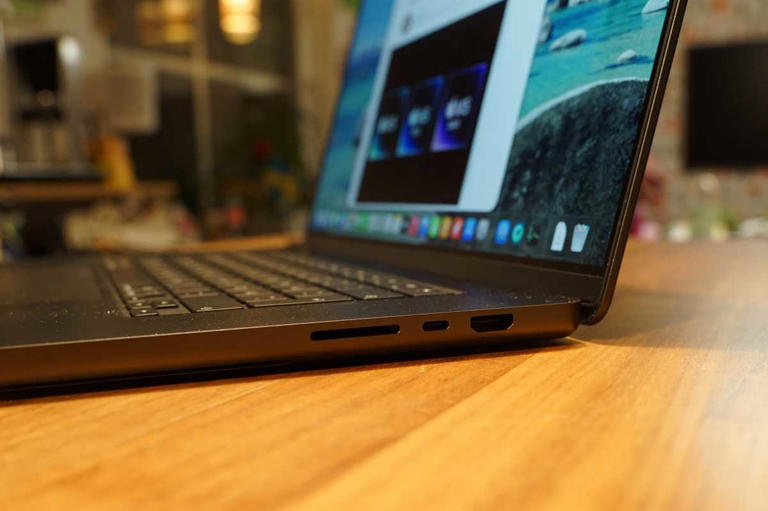
The MacBook lineup is entering its most aggressive phase since the Intel-to-Apple Silicon transition. The M5 chip, expected in late 2024 or early 2025, will bring generational leaps in efficiency and AI performance.
Based on TSMC’s N3E process, the M5 will offer higher transistor density, better power efficiency, and enhanced GPU capabilities. Expect: - 50% faster neural engine performance - Support for multiple external displays on M5 Air models - Longer battery life—up to 24 hours in some configurations
Apple is also rumored to be developing a dual-core AI processor that works alongside the M5, handling background machine learning tasks without draining the main CPU.
Workflow tip: For creative professionals, this means Final Cut Pro could use AI to auto-tag footage, suggest edits, or enhance audio—all in real time, with minimal lag. Developers will benefit from faster Xcode compilation and local AI model training.
The MacBook Pro 14” and 16” will likely be first to receive the M5, followed by a redesigned MacBook Air in 2025. That Air may feature a thinner chassis, improved speakers, and a new thermal system to handle sustained AI loads.
Limitation to consider: While on-device AI improves privacy, it also limits model size. Apple’s local LLMs are estimated to be around 3B parameters—smaller than cloud-based models like GPT-4. This means complex reasoning tasks may still require internet fallback, though Apple is working on hybrid processing to minimize the gap.
Beyond iPhone and MacBook: What Else Is on the Roadmap?
Apple’s ultra roadmap stretches far beyond phones and laptops. Several secondary but critical products are confirmed or strongly indicated for upgrades.
Apple Vision Pro 2 – Expected in 2025, with M4 chip, lighter design, and AVP-specific AI features like spatial note-taking and real-time language translation in immersive environments.
AirPods Pro 3 – Likely to include on-device voice detection for “Hey Siri” without iPhone pairing, plus health monitoring via advanced biometric sensors.
Apple Watch Series 10 – Rumored to feature blood glucose monitoring (non-invasive), longer battery life, and standalone AI coaching for workouts.
HomePod 3 – A redesign with better audio, touch controls, and a smarter Siri that can manage home automation using natural language patterns.
These devices won’t just get better specs—they’ll become AI hubs. For example, the next-gen HomePod could analyze your daily routine and suggest optimal lighting, temperature, and music based on mood detection from voice tone.
Ecosystem Synergy: How Apple’s Devices Will Work Together
The real power of Apple’s roadmap isn’t individual devices—it’s how they’ll interact. Continuity is evolving into true collaboration.
With iOS 18, iPadOS 18, and macOS 15, Apple is introducing: - Universal Control++: Extend cursor and drag-and-drop across up to four devices - AI-powered Handoff: Start a task on iPhone, and your Mac predicts and pre-loads related files - Cross-device Siri: Initiate a request on one device, continue on another without repetition
Example: You snap a photo on your iPhone of a whiteboard during a meeting. Siri on your MacBook detects the image in your clipboard and suggests creating a to-do list from the handwritten notes—using on-device OCR and AI parsing.
This level of integration reduces friction but raises privacy concerns. Apple’s answer? All processing stays within the ecosystem, encrypted and isolated. No data leaves your devices unless you explicitly allow it.
A common mistake developers make is building apps that don’t leverage this synergy. The roadmap demands apps that work seamlessly across devices, anticipate user intent, and support on-device AI—otherwise, they’ll feel outdated.
What’s Missing? Gaps in the Roadmap
Even with a clear direction, Apple’s ultra roadmap has blind spots.
Gaming: Despite M-series performance, Apple still lacks a unified gaming platform. No App Store console mode, no first-party game studio, no controller standard. Competitors like Sony and Microsoft dominate here.
Affordability: High-end AI features may launch only on Pro models, leaving base iPhone and MacBook users behind. Apple risks alienating budget-conscious customers.
Repairability: New designs often sacrifice user serviceability. The M5 MacBook Air, for instance, may use fused battery and display units—making third-party repairs harder.
These gaps won’t derail the roadmap, but they could slow adoption in key markets like education, emerging economies, and gaming.
The Verdict: Apple Is Building the AI-Powered Personal Hub
Apple’s ultra roadmap confirms a singular vision: your devices should know you better than anyone else—without compromising your privacy.
The iPhone isn’t just a phone. It’s a personal AI assistant. The MacBook isn’t just a laptop. It’s a creative command center. And together, they form a tightly integrated ecosystem that learns, adapts, and anticipates.
This isn’t about specs on a webpage. It’s about behavior change. Users will stop asking “How do I do this?” and start saying “Do this for me.” Apple is positioning itself to answer that call—quietly, securely, and effectively.
For consumers, the takeaway is clear: hold off on upgrading if you’re due in 2024. The iPhone 16, M5 MacBooks, and AI-powered software suite will redefine what Apple devices can do. For developers, the message is urgent: optimize for on-device AI, cross-device continuity, and privacy-first design—or risk irrelevance.
The future isn’t coming. It’s already mapped out. And it’s running on Apple Silicon.
FAQs
Will the iPhone 16 have a portless design? No—current leaks confirm a USB-C port remains, with faster USB 3 speeds in Pro models.
When will M5 MacBooks be released? Expected Q4 2024 for MacBook Pro, Q2 2025 for MacBook Air.
Can Siri really understand complex requests now? Yes—iOS 18 introduces natural language parsing, allowing multi-step commands like “Send last night’s photo to Mom and caption it ‘Beach vibes.’”
Will older devices support Apple Intelligence? Only iPhone 15 Pro and later, M1 Macs and newer. The A17 Pro chip is the minimum for on-device AI.
Is Apple developing its own AI model? Yes—Apple has trained multiple large language models internally, optimized for on-device performance and privacy.
Will MacBook Air get the M5 chip? Yes—though it may use a lower-power variant without the full neural engine.
Can I use AI features without internet? Most core AI functions—photo search, text summarization, Genmoji—work offline. Cloud fallback is used only for complex queries.
FAQ
What should you look for in Apple’s Ultra Roadmap Confirmed: iPhone, MacBook and More? Focus on relevance, practical value, and how well the solution matches real user intent.
Is Apple’s Ultra Roadmap Confirmed: iPhone, MacBook and More suitable for beginners? That depends on the workflow, but a clear step-by-step approach usually makes it easier to start.
How do you compare options around Apple’s Ultra Roadmap Confirmed: iPhone, MacBook and More? Compare features, trust signals, limitations, pricing, and ease of implementation.
What mistakes should you avoid? Avoid generic choices, weak validation, and decisions based only on marketing claims.
What is the next best step? Shortlist the most relevant options, validate them quickly, and refine from real-world results.