Annual reviews of lockout tagout (LOTO) procedures are often treated as a box to check—something done to meet OSHA requirements and move on. But when done right, a LOTO annual review becomes a diagnostic tool: revealing gaps in training, outdated procedures, and unseen hazards. Too many facilities breeze through this process with the same checklist year after year, assuming that because nothing went wrong last time, nothing will this time. That mindset is where complacency begins.
The truth? Machinery changes. Processes evolve. New employees come on board. And if your LOTO program isn’t updated to reflect those shifts, your safety plan is just a document—not a defense.
This is why the lockout tagout annual review must be more than a formality. It’s a proactive intervention to ensure that energy control procedures remain effective, relevant, and aligned with real-world operations.
What Is a Lockout Tagout Annual Review?
A lockout tagout annual review is a formal evaluation of an organization’s energy control program. OSHA standard 29 CFR 1910.147 requires that each energy control procedure be certified at least annually to confirm that it’s accurate and being followed.
It’s not a full audit of every machine or a retraining session for every employee—though those often follow. Instead, it’s a focused analysis of a representative sample of LOTO procedures to validate their correctness and effectiveness. The review must include:
- A walkthrough of the actual procedure being used on the equipment
- Verification that all energy sources are properly identified and isolated
- Confirmation that employees understand their roles
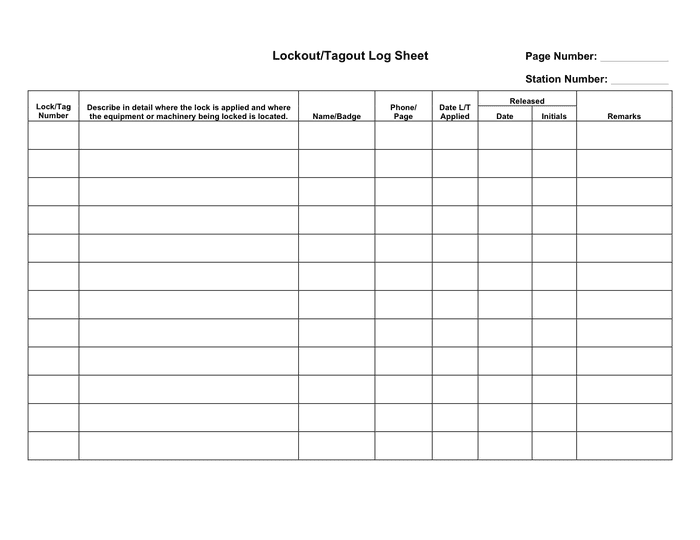
- Documentation of who performed the review and when
The certification must be recorded, including the machine or equipment, the date of review, and the name of the person who conducted it.
Example: At a food processing plant, the safety manager reviews the LOTO procedure for a conveyor mixer. They watch an authorized employee perform the lockout, checking whether the written steps match the actual actions—like whether a hydraulic line is being drained before locking out, or if a secondary electrical disconnect was missed.
Why the Annual Review Is Where Real Safety Gaps Surface
Most LOTO failures don’t stem from ignorance. They stem from outdated assumptions.
A procedure written five years ago might no longer reflect how the machine is actually used. Maybe a bypass was added for speed. Maybe maintenance now involves contractors unfamiliar with your workflow. Or perhaps an energy-isolating device was replaced with one that doesn’t accept standard locks.
These are the kinds of issues an annual review can catch—if it’s not just a paperwork exercise.
Common gaps found during real reviews:
- Mismatch between written steps and actual practice
- Employees may skip steps they see as unnecessary, like double-checking pneumatic lines. If the procedure doesn’t account for this, the documented process is fiction.
- Missing energy sources
- A machine might have a secondary power feed added during an upgrade, but the LOTO procedure wasn’t updated. This is especially common with retrofitted automation systems.
- Untrained temporary or contract workers
- If a contractor performs maintenance, are they included in your LOTO verification? Too often, the answer is no.
- Worn or incompatible equipment
- Locks that don’t fit new valve handles, or tags that fade in outdoor environments, undermine the entire system.
A strong annual review doesn’t just verify compliance—it reveals these hidden risks before they cause harm.
Who Should Conduct the Review?
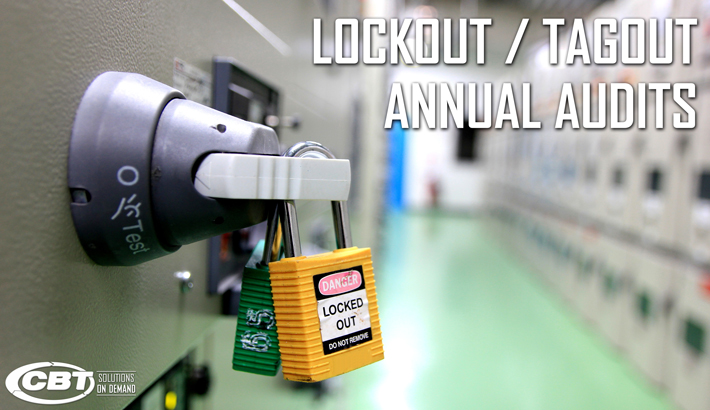
OSHA doesn’t specify who must perform the annual review, but it clearly states that it must be done by someone other than the employee who normally uses the procedure. This ensures objectivity.
Best practice is to assign the task to: - Safety officers - Plant engineers - Maintenance supervisors - External safety consultants
Having an independent reviewer eliminates the “this is how we’ve always done it” bias.
Pro Tip: Rotate reviewers across departments. A maintenance engineer reviewing a production team’s LOTO process often spots issues that safety personnel might overlook—like workflow bottlenecks that lead to shortcuts.
How to Run an Effective Annual Review: A Step-by-Step Approach
Skip the clipboard-and-checklist routine. Treat the review as a live simulation.
#### Step 1: Select Equipment to Review Don’t just pick the easiest machine. Prioritize: - High-risk equipment (presses, grinders, conveyors) - Machines with recent modifications - Units involved in near-misses or incidents - Those operated by high-turnover teams
Review at least one procedure per shift or department to ensure coverage.
#### Step 2: Pull the Written Procedure Compare the official document to the version posted at the machine. Are they identical? Are diagrams up to date?
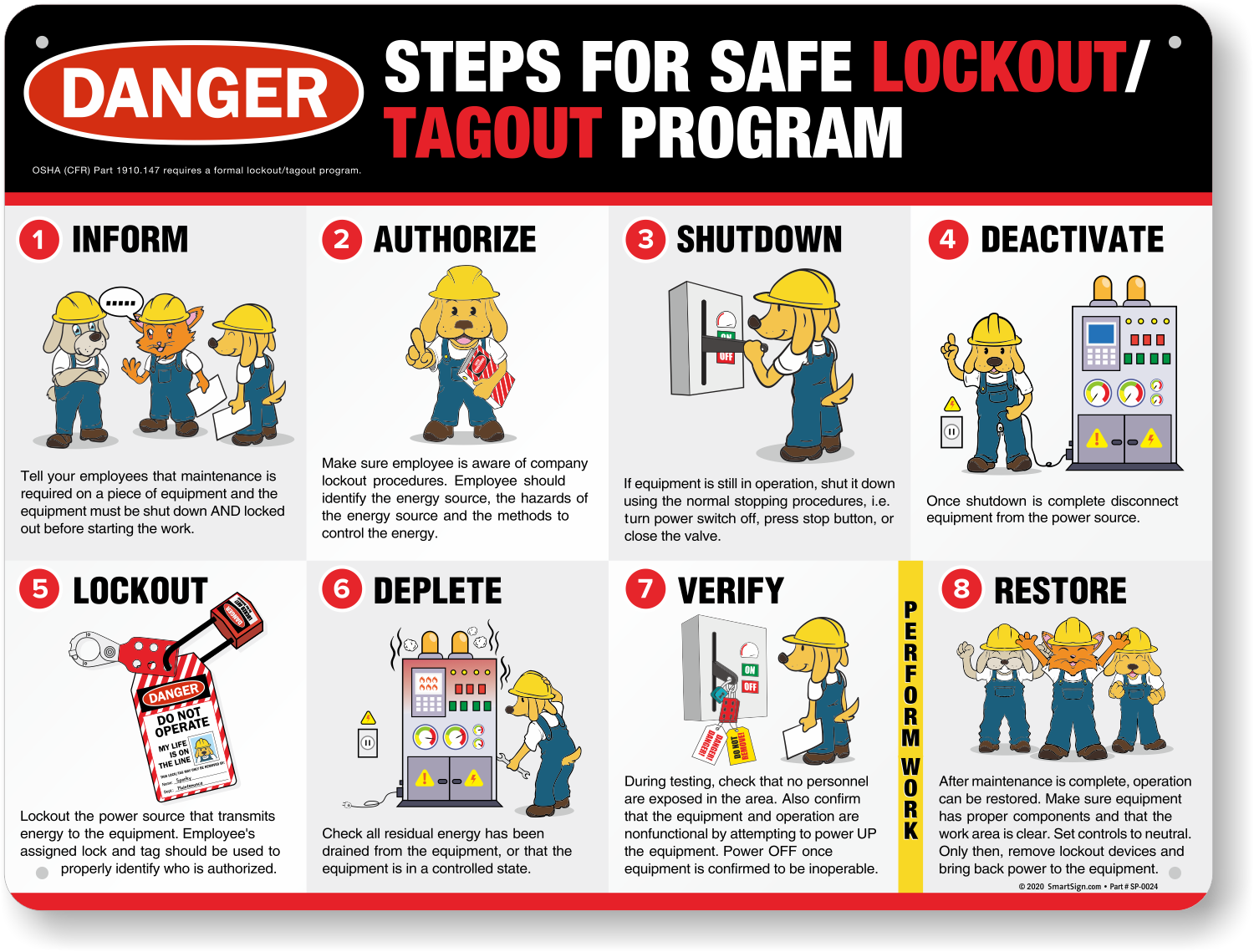
#### Step 3: Observe a Live Lockout Have an authorized employee perform the lockout while you observe. Don’t guide them—watch what they do naturally.
Ask: - Do they identify all energy sources? - Are locks applied before tags? - Is stored energy properly dissipated? - Do they verify isolation (e.g., trying to start the machine)?
#### Step 4: Interview the Employee Afterward, ask: - “What would you do if a co-worker tried to restart this machine?” - “Have you ever found a step in this procedure unclear?” - “Has anything changed on this machine since the last time you locked it out?”
Their answers often expose weaknesses in training or procedure clarity.
#### Step 5: Document and Correct Update any outdated steps, retrain as needed, and re-certify. File the review with signatures and dates.
Common Mistakes That Undermine the Review
Even well-intentioned teams make errors that reduce the review’s value.
Mistake 1: Reviewing the wrong procedure Teams often review the most recent version in the safety manual, not the one actually posted at the machine. If they differ, the review is meaningless.
Mistake 2: Skipping employee observation Some “reviews” are done solely by reading the document. Without watching the lockout in action, you miss behavioral gaps.
Mistake 3: Using the review as a disciplinary tool If employees fear punishment for deviations, they’ll hide them. Frame the review as improvement, not inspection.
Mistake 4: Not involving affected employees Affected employees (those who operate but don’t service equipment) should understand the LOTO process. If they’re excluded from the review, you lose a key layer of awareness.
Mistake 5: Failing to act on findings Finding a missing energy source but not updating the procedure? That’s worse than not reviewing at all. It creates documented awareness of a hazard—without correction.
Beyond Compliance: Using the Review to Strengthen Safety Culture
The annual LOTO review is one of the few moments when safety leadership steps into the real world of machine operation. Use it to build trust, not just compliance.
When employees see that their input leads to updated procedures, they’re more likely to follow them. When managers participate in reviews, they gain firsthand understanding of frontline challenges.

Real Use Case: A paper mill conducted its annual review and discovered that maintenance techs were using lockout adapters because standard locks didn’t fit modified gearboxes. Instead of reprimanding them, the safety team redesigned the lockout kit and updated all procedures. The result? A 40% drop in LOTO-related close calls the following year.
This is how safety evolves—from static rules to dynamic practice.
Tools and Resources to Support Your Annual Review
While OSHA doesn’t require specific tools, using structured resources improves consistency.
| Tool | Purpose | Best For |
|---|---|---|
| LOTO Procedure Templates | Standardize documentation | Facilities with multiple machine types |
| Digital Audit Apps (e.g., SafetyCulture, Fulcrum) | Capture photos, notes, and signatures in real time | Large sites with distributed teams |
| Lockout Kits with Universal Fittings | Reduce hardware incompatibility | Facilities with aged or mixed equipment |
| Training Videos with Procedure Walkthroughs | Reinforce correct steps | High-turnover environments |
| Incident Simulation Exercises | Test team response under pressure | High-risk or complex operations |
These aren’t replacements for human judgment—but they close gaps that paper-based systems often miss.
The Hidden Cost of Skipping or Rushing the Review
Think of the annual review as preventive maintenance for your safety program. Skip it, and you risk more than a citation.
Real consequences include: - Increased risk of injury from unexpected energization - Liability in the event of an incident (OSHA will ask: “When was your last review?”) - Erosion of safety culture as employees see procedures as irrelevant - Costly downtime from poorly executed lockouts
One manufacturing plant faced a $98,000 OSHA fine after an amputation incident. Investigation revealed that the LOTO procedure hadn’t been reviewed in three years—and didn’t include a hydraulic release step. The employee had followed the outdated document. The fine wasn’t just for the injury—it was for knowing noncompliance.
Final Thoughts: Make the Review a Living Process
The lockout tagout annual review should not be a once-a-year scramble. Integrate it into your broader safety rhythm.
Start early. Pick one machine per month to pre-review. Use downtime between shifts. Involve new hires in the process as part of onboarding.
When done with rigor and respect, the annual review isn’t a burden—it’s a safeguard. It keeps your LOTO program honest, your people protected, and your operations resilient.
Don’t wait for an incident to prove its value. Treat the review as the frontline defense it’s meant to be.
Take action now: Pull your last review documentation. Is it detailed? Was it based on observation? Does it reflect how work actually happens? If not, start rebuilding—before the next cycle begins.
Frequently Asked Questions
What triggers a LOTO procedure review beyond the annual requirement? Any time equipment is modified, a new hazard is identified, or an incident occurs, the related LOTO procedure must be reviewed and updated immediately.
Can digital signatures be used for LOTO review certification? Yes, as long as the system ensures authenticity, integrity, and traceability—such as a secure audit trail with user login and timestamp.
Do temporary or contract workers need to be included in the annual review process? Yes, if they perform servicing or maintenance on equipment, they must be trained and their practices observed during the review.
How many LOTO procedures should be reviewed each year? OSHA requires each procedure be reviewed at least annually. In large facilities, this can be staggered, but all must be covered within a 12-month period.
Is a full retraining required after every annual review? Only if the review identifies deficiencies in employee knowledge or procedure changes that affect safety practices.
Can the same person conduct multiple annual reviews? Yes, as long as they are not the employee who normally performs the lockout on that equipment.
What’s the difference between a LOTO audit and an annual review? An audit is a comprehensive evaluation of the entire LOTO program. The annual review focuses on verifying individual procedures through observation and documentation.
FAQ
What should you look for in Lockout Tagout Annual Review: Why It Matters Beyond Compliance? Focus on relevance, practical value, and how well the solution matches real user intent.
Is Lockout Tagout Annual Review: Why
It Matters Beyond Compliance suitable for beginners? That depends on the workflow, but a clear step-by-step approach usually makes it easier to start.
How do you compare options around Lockout Tagout Annual Review: Why It Matters Beyond Compliance? Compare features, trust signals, limitations, pricing, and ease of implementation.
What mistakes should you avoid? Avoid generic choices, weak validation, and decisions based only on marketing claims.
What is the next best step? Shortlist the most relevant options, validate them quickly, and refine from real-world results.