Equipment maintenance shouldn’t come at the cost of human safety. Yet, every year, workers suffer serious injuries—or worse—because machinery is inadvertently energized during servicing. The solution isn’t complicated: it’s a structured Lockout Tagout (LOTO) program, and one of the most effective tools to implement it is a high-quality lockout tagout safety video. These videos don’t just check a regulatory box—they shape behavior, clarify complex procedures, and create a culture where safety is non-negotiable.
OSHA mandates that all employees understand energy control procedures, and video training is one of the most scalable, consistent, and engaging ways to deliver that knowledge. But not all LOTO safety videos are created equal. The best ones don’t just explain what to do—they show how to do it, anticipate real-world mistakes, and reinforce accountability.
Why Lockout Tagout Safety Videos Are Non-Negotiable
Lockout tagout is a life-saving procedure designed to disable machinery or equipment to prevent the release of hazardous energy during service or maintenance. Despite its effectiveness, OSHA consistently ranks LOTO violations among the top 10 most cited standards—because non-compliance is still widespread.
A well-produced safety video bridges the gap between policy and practice. It standardizes training across shifts, departments, and locations. Unlike verbal instructions or printed manuals, videos combine visual demonstration with auditory reinforcement, which improves retention by up to 65% (based on dual-coding theory in adult learning).
Consider this: a maintenance technician is sent to repair a conveyor system. If they haven’t seen a visual demonstration of how to isolate electrical, mechanical, and pneumatic energy sources—and verify zero energy—they’re more likely to skip steps. A LOTO safety video reduces that risk by showing the entire sequence in real-world context.
Key Elements of an Effective Lockout Tagout Safety Video
Not every safety video earns attention or changes behavior. The most impactful ones share several core characteristics:
#### 1. Real Equipment, Real Scenarios Stock footage of workers in lab coats pressing buttons doesn’t cut it. The best videos film actual machinery used in specific industries—conveyor belts in manufacturing, presses in metalworking, or pumps in chemical plants. When employees see their equipment on screen, they pay closer attention.
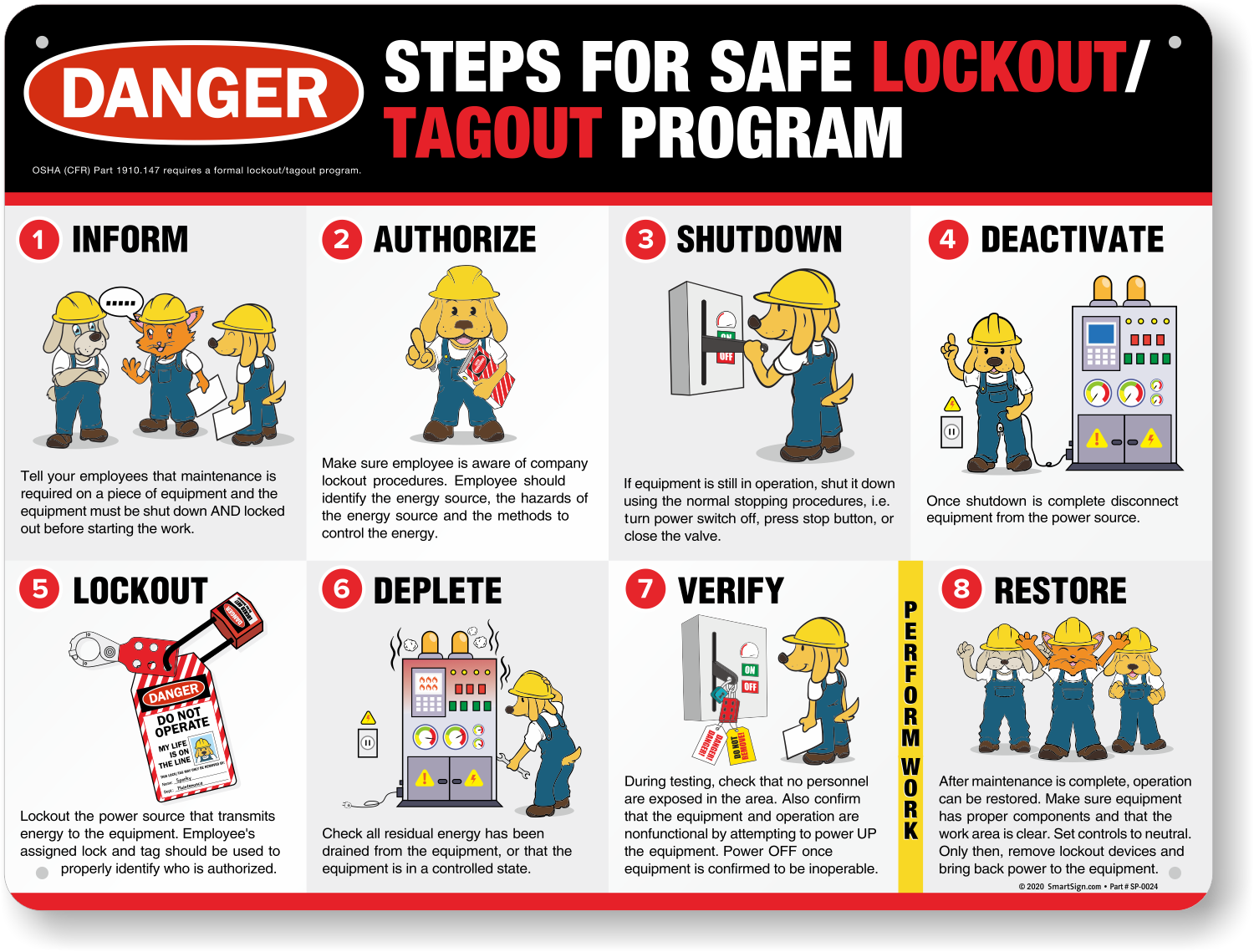
#### 2. Step-by-Step Demonstration A strong video walks viewers through the seven critical steps of LOTO: - Preparation - Shutdown - Isolation - Lockout/Tagout application - Stored energy check - Verification of isolation - Clearance and restart
Each step should be shown with proper PPE, correct lock placement, and clear communication protocols.
#### 3. Common Mistakes Highlighted Show what not to do. For example: - Using someone else’s lock - Skipping energy verification - Removing a tag without authorization - Failing to communicate with team members
These mistakes are often subtle—and deadly. Seeing them dramatized helps employees recognize red flags in real time.
#### 4. OSHA Compliance Alignment The video must reference 29 CFR 1910.147—the OSHA standard for control of hazardous energy. It should clarify roles: who is an “authorized employee,” who is an “affected employee,” and what documentation is required.

#### 5. Language and Accessibility In multilingual workplaces, videos should include subtitles or multiple audio tracks. Hearing-impaired employees rely on captioning, and clarity shouldn’t depend on fluency in English.
When to Use a LOTO Safety Video in Your Training Program
A lockout tagout safety video isn’t a one-time event. It’s a tool to be integrated strategically across multiple touchpoints.
#### New Employee Onboarding New hires may have little to no exposure to industrial safety procedures. A LOTO video provides a consistent baseline before they set foot near machinery. Pair it with a quiz to confirm understanding.
#### Annual Refresher Training OSHA requires retraining at least annually. Repeating the same PowerPoint slides leads to disengagement. A compelling video resets attention and reinforces key behaviors. Use it as a launchpad for group discussion or hands-on drills.
#### Procedure Updates or Equipment Changes When new machinery is installed or processes are modified, update your training. A customized video segment showing the new lockout points prevents confusion.
#### Incident Response After a near-miss or safety event, replay the LOTO video with the involved team. Use it not as punishment, but as a neutral reference to identify where the process broke down.
Top 5 Lockout Tagout Safety Video Providers For companies without in-house production capabilities, third-party providers offer professional, compliant LOTO training videos. Here are five trusted options:
| Provider | Key Features | Industry Focus | Duration | Language Options |
|---|---|---|---|---|
| Pure Safety (by Brady) | OSHA-aligned modules, interactive quizzes, customizable content | Manufacturing, Oil & Gas | 20–30 min | English, Spanish |
| J. J. Keller & Associates | Real-world footage, supervisor guides, test questions | Transportation, Warehousing | 18–25 min | English, Spanish |
| Safety Matters | Animated breakdowns, emphasis on human factors | Construction, Utilities | 15–20 min | English |
| PureH2O Training | Mobile-friendly, SCORM-compliant, LMS integration | Food Processing, Pharma | 22 min | English, French |
| MSA Safety | High-production value, includes PPE integration | Mining, Heavy Industry | 25 min | English, Spanish, German |
Each of these providers offers content that can be licensed for internal use. Some allow site-specific customization—critical for facilities with unique machinery or workflows.
Pro Tip: Avoid generic “off-the-shelf” videos if your equipment has complex energy sources (e.g., hydraulic accumulators, robotic arms). In those cases, consider commissioning a custom video that mirrors your actual lockout points.
Common Pitfalls in LOTO Video Training (And How to Avoid Them)
Even with a solid video, training can fail if delivery isn’t handled correctly.
#### ❌ Treating the Video as “Set and Forget” Playing the video once and filing a completion sheet is not effective training. Employees zone out. Follow up with hands-on verification: have them demonstrate lockout on actual equipment.
#### ❌ Skipping the Discussion After the video, facilitate a 10-minute debrief. Ask: - What was the most surprising step? - Where have you seen shortcuts taken? - What would you do if you found a locked-out machine with no tag?
These conversations surface real concerns and reinforce accountability.
#### ❌ Ignoring Retention People forget. Reinforce key messages with job aids: - Post LOTO flowcharts near high-risk equipment - Issue pocket-sized checklists - Run quarterly “lockout drills”
#### ❌ Failing to Update Content If your facility upgrades to automated systems or adds new energy sources (like compressed air banks), your video must reflect those changes. Outdated training creates false confidence.
Real-World Use Case: How a Plant Reduced Incidents by 70%
A Midwest automotive parts manufacturer had three near-misses in one year—all related to improper lockout during mold changes on stamping presses. Their existing training? A 10-page PDF and a 5-minute supervisor talk.
- They adopted a new strategy:
- Commissioned a 24-minute LOTO safety video featuring their actual press lines
- Added scenes showing incorrect practices (e.g., dangling tags, shared locks)
- Required all maintenance staff to watch it quarterly
- Followed viewing with a hands-on verification test
Within 18 months, LOTO-related incidents dropped to zero. Safety audits showed 94% compliance with isolation procedures—up from 52%. The video didn’t just teach rules; it changed behavior.
Making the
Most of Your LOTO Safety Video Investment
A video is only as good as the system around it. Maximize impact with these workflow tips:
- Schedule Wisely: Avoid end-of-shift training. Employees are fatigued. Mid-morning sessions yield better retention.
- Track Completion: Use a Learning Management System (LMS) to monitor who’s watched, passed assessments, and needs retraining.
- Involve Supervisors: Have them watch alongside teams. Their presence signals that safety is a leadership priority.
- Reinforce Visually: Place QR codes near machinery linking to the video or a condensed version. Workers can scan for a quick refresher before starting work.
- Audit Regularly: Every six months, review lockout procedures and verify that training aligns with current practices.
Choose Clarity Over Compliance
A lockout tagout safety video shouldn’t exist just to satisfy OSHA inspectors. It should exist because lives depend on understanding the sequence of energy isolation. The best videos don’t just inform—they engage, warn, and empower.
If your current training consists of a faded poster and verbal instructions, it’s time to upgrade. Invest in a video that reflects your real environment, addresses real risks, and demands real accountability. Then pair it with hands-on practice, follow-up, and continuous reinforcement.
Because when the power’s off, safety shouldn’t be left on.
FAQ
Why is a lockout tagout safety video better than a written manual? Videos combine visual and auditory learning, improving comprehension and retention. They show real-time demonstrations of procedures that static text can’t replicate.
How often should we show the LOTO safety video to employees? OSHA requires annual retraining. Show the video yearly at minimum, and repeat it after incidents, equipment changes, or observed procedural lapses.
Can we use a generic LOTO video for our facility? Only if your equipment and processes closely match what’s shown. For most industrial sites, a customized or industry-specific video is far more effective.
What’s the ideal length for a LOTO safety video? Between 15 and 30 minutes. Longer videos risk disengagement; shorter ones may skip critical steps.
Do all employees need to watch the full LOTO video? Authorized employees (who perform maintenance) need full training. Affected employees (who operate equipment) need a shorter version focused on recognition and awareness.
Should the video include a test or quiz? Yes. A short assessment ensures understanding and provides documentation for compliance audits.
Can we stream the video on mobile devices? Yes—choose a provider or format that supports mobile access, especially for remote or field technicians.
FAQ
What should you look for in Lockout Tagout Safety Video Essentials for Workplace Compliance? Focus on relevance, practical value, and how well the solution matches real user intent.
Is Lockout Tagout Safety Video Essentials for Workplace Compliance suitable for beginners? That depends on the workflow, but a clear step-by-step approach usually makes it easier to start.
How do you compare options around Lockout Tagout Safety Video Essentials for Workplace Compliance? Compare features, trust signals, limitations, pricing, and ease of implementation.
What mistakes should you avoid? Avoid generic choices, weak validation, and decisions based only on marketing claims.
What is the next best step? Shortlist the most relevant options, validate them quickly, and refine from real-world results.