Every year, hundreds of workers suffer injuries from unexpected machinery startup during servicing. The root cause? Poor energy control. At the heart of every effective lockout tagout (LOTO) program is a simple but powerful tool: the lockout tagout log sheet. This isn’t just paperwork—it's a legal and operational necessity that verifies safety, assigns responsibility, and protects lives.
Without a consistently used log sheet, even the most rigorous LOTO procedures become unverifiable. OSHA doesn’t require a log sheet in every scenario, but without one, proving compliance after an incident becomes nearly impossible. This guide breaks down why the log sheet matters, how to use it correctly, and what real-world teams get wrong.
Why a Lockout Tagout Log Sheet Is Non-Negotiable
The primary goal of a LOTO log sheet is accountability. When multiple employees service complex machinery, knowing who locked out which energy source—and when—can mean the difference between a safe restart and a catastrophic accident.
Consider this scenario: A maintenance technician locks out a conveyor system. While they’re working, a supervisor, unaware of the ongoing repair, removes the lock and restarts the line. Without a log sheet documenting who applied the lock and when, you have no record of the lapse—just a serious injury and a compliance failure.
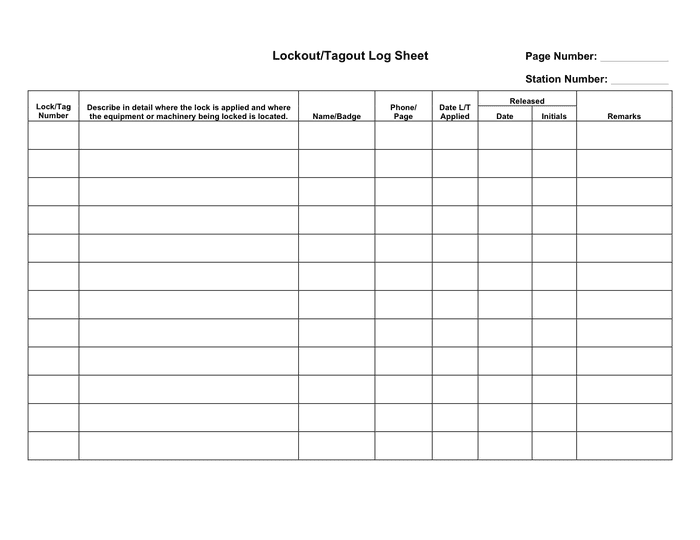
A log sheet acts as an official trail that answers: - Who initiated the lockout? - What equipment was locked? - Which energy sources were isolated? - When did the lockout begin and end? - Was the equipment safely re-energized?
This documentation supports internal audits, OSHA inspections, and incident investigations. It also reinforces discipline by making each employee personally accountable.
What Should Be Included in a LOTO Log Sheet
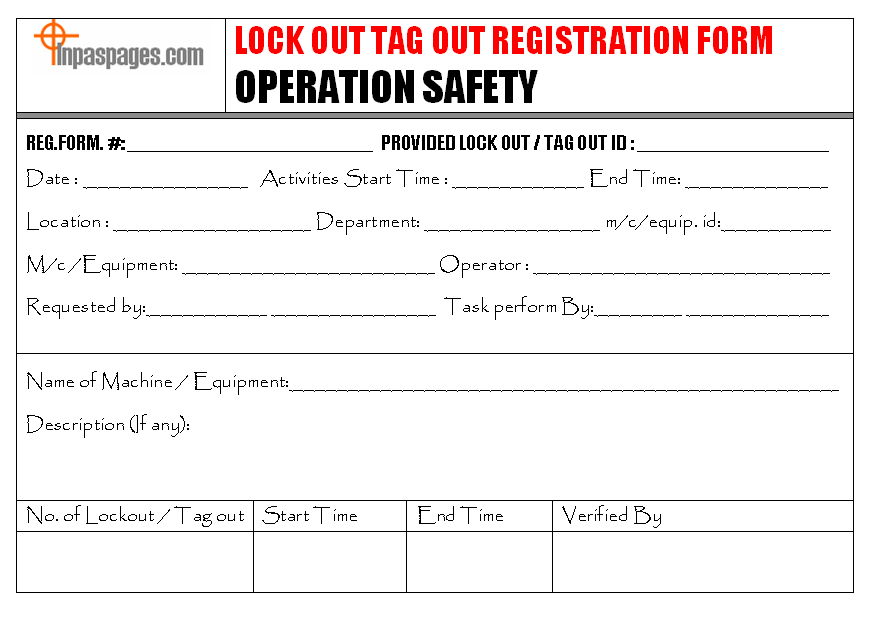
A well-designed log sheet isn’t cluttered with unnecessary fields. It captures only what’s essential to verify a proper lockout. Here’s a standard breakdown of required components:
Essential Fields for Every Entry
| Field | Purpose |
|---|---|
| Date & Time (Start/End) | Tracks duration of lockout |
| Equipment Name/ID | Identifies the specific machine |
| Employee Name & ID | Assigns responsibility |
| Type of Energy Isolated | Lists sources (electrical, hydraulic, pneumatic, etc.) |
| Lock/Tag Number | Matches physical lock to log entry |
| Reason for Lockout | Documents maintenance or repair task |
| Supervisor Approval | Adds layer of verification |
| Clearance & Re-energization Sign-off | Confirms safe restoration |
Some high-risk environments also include: - Shift information - Work permit number - Emergency contact - Witness signature
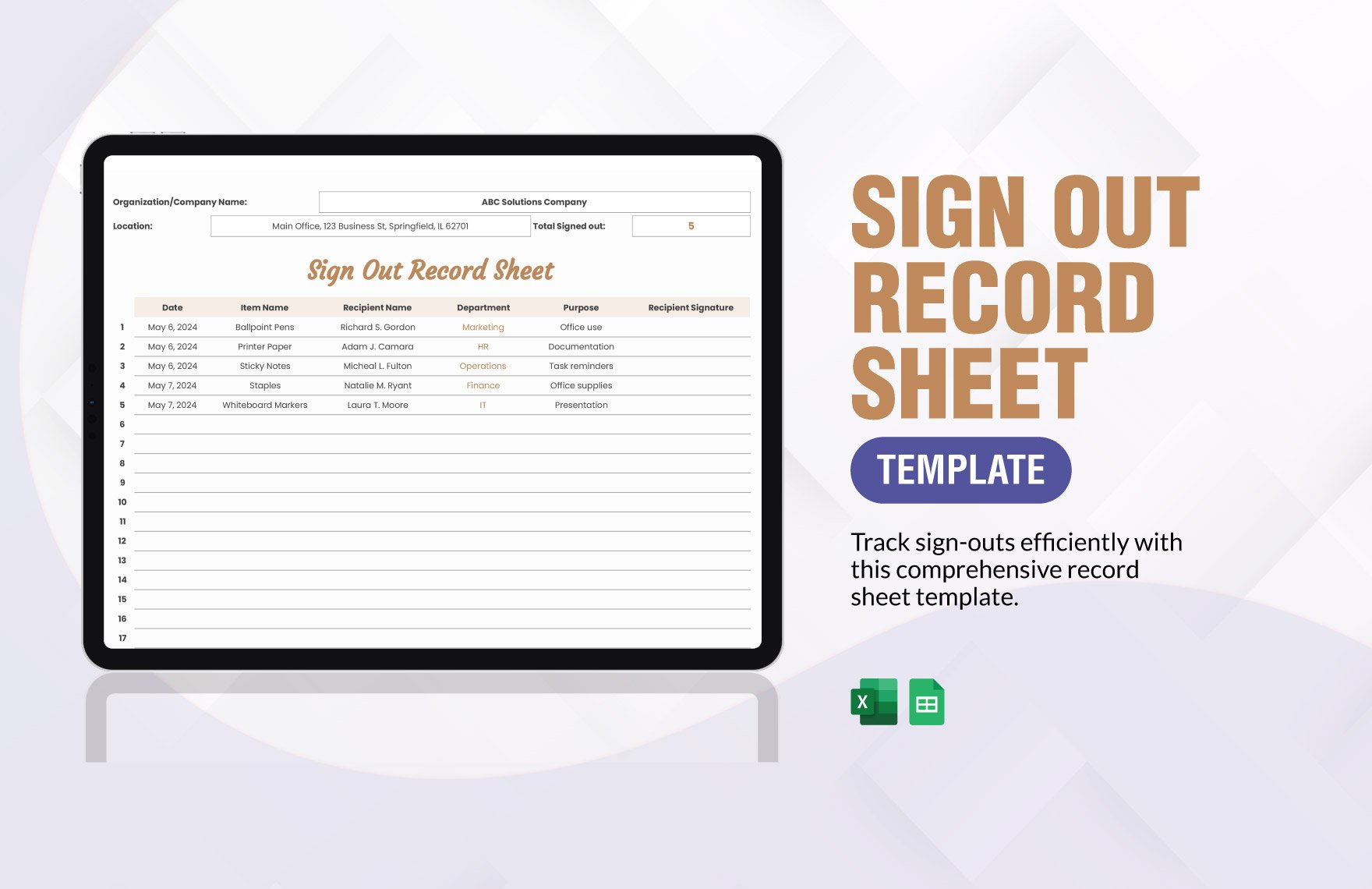
The best log sheets are standardized templates posted near equipment or stored digitally in a centralized system.
Common Mistakes That Undermine LOTO Log Sheets
Even teams with log sheets in place often fail due to avoidable errors. These mistakes don’t just weaken safety—they invalidate compliance.
1. Incomplete Entries Leaving fields blank, especially time stamps or energy types, makes the log unreliable. If a technician forgets to list hydraulic lines, a coworker might assume all energy is de-energized when it’s not.
Fix: Design forms with mandatory fields. Use digital systems that won’t allow submission without completion.
2. Delayed Documentation Writing log entries after the fact leads to inaccuracies. One refinery worker admitted to “filling out three logs at once after shift.” That’s not documentation—it’s guesswork.
Fix: Enforce real-time logging. Make it part of the LOTO checklist.
3. Shared or Generic Logbooks
Using a single, unsecured log for multiple machines or departments increases risk. A log for a boiler system shouldn’t share pages with a packaging line.
Fix: Use equipment-specific logs or digital records tied to asset IDs.
4. No Archival Process OSHA can request LOTO records during inspections. If logs are lost, damaged, or stored haphazardly, you’re exposed.
Fix: Archive logs for at least one year. Digitize for searchability and backup.
Paper vs. Digital Lockout Tagout Log Systems
While paper logs are still common, digital solutions are gaining ground—especially in facilities with complex or frequent maintenance.
Paper Log Sheets
- Pros: Low cost, no training needed, always accessible
- Cons: Prone to damage, hard to track, difficult to audit
Digital Log Systems
- Pros: Real-time updates, searchable history, integrates with CMMS
- Cons: Requires devices, initial setup, potential downtime during tech issues
Many companies use a hybrid model: paper logs at the point of use, scanned and archived digitally.
Insight: The shift isn’t just about convenience. Digital logs reduce human error by 40% in facilities with over 50 LOTO events per month (source: EHS Today, industry survey).
Top 5 Lockout Tagout Log Sheet Templates & Tools
Not all log sheets are created equal. The best ones combine OSHA alignment with real-world usability. Here are five field-tested options:
| Tool | Format | Key Features | Best For |
|---|---|---|---|
| OSHA 3120-12R | PDF/Print | Official OSHA sample, simple fields | Small businesses, compliance baseline |
| Creative Safety Supply Template | Editable PDF | Color-coded sections, multilingual | Visual workplaces, diverse teams |
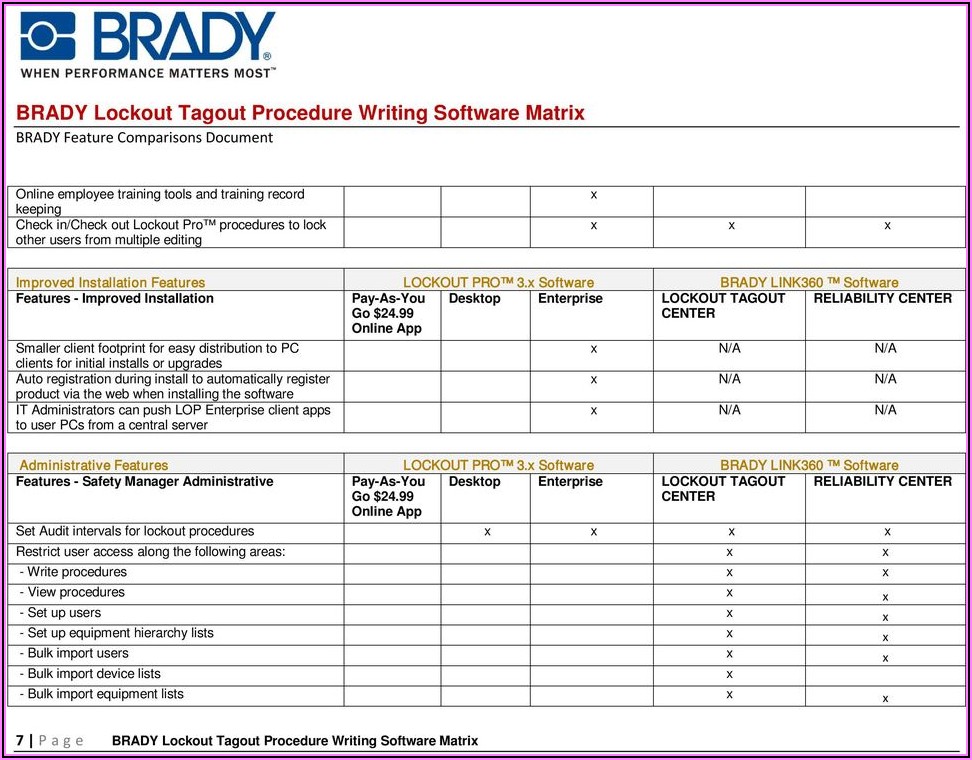
| EHS Insight LOTO Module | Cloud-based | Real-time logging, mobile access, audit trails | Mid to large facilities |
| Lockout-Tagout.com Free Template | DOCX/PDF | Fully customizable, includes checklist | Custom workflows |
| FaciLitor LOTOPro | Software platform | Workflow automation, equipment tagging, reporting | High-risk or regulated industries |
Choose based on your scale and risk level. A small warehouse might thrive on a printed OSHA template. A chemical plant needs automation and traceability.
Real-World Use Cases: How Teams Use LOTO Logs Effectively
Case 1: Automotive Assembly Plant A Ford supplier implemented digital LOTO logs tied to their maintenance scheduling system. Each work order auto-generates a log entry. Technicians scan QR codes on machines to log lock application and removal. Result: 60% faster audits and zero lockout-related incidents in 18 months.
Case 2: Food Processing Facility
After a near-miss with a meat grinder, a poultry processor introduced shift-specific log books. Each morning, supervisors review the previous night’s entries during safety huddles. This created cultural accountability and reduced unauthorized re-energizations by 75%.
Case 3: University Maintenance Team Campus engineers service everything from boilers to lab equipment. They use a color-coded paper log system: red for electrical, blue for gas, green for mechanical. Logs are stored in locked cabinets by building. Simple, but effective for decentralized teams.
These examples show that consistency and accessibility matter more than complexity.
Integrating LOTO Logs into Your Safety Program
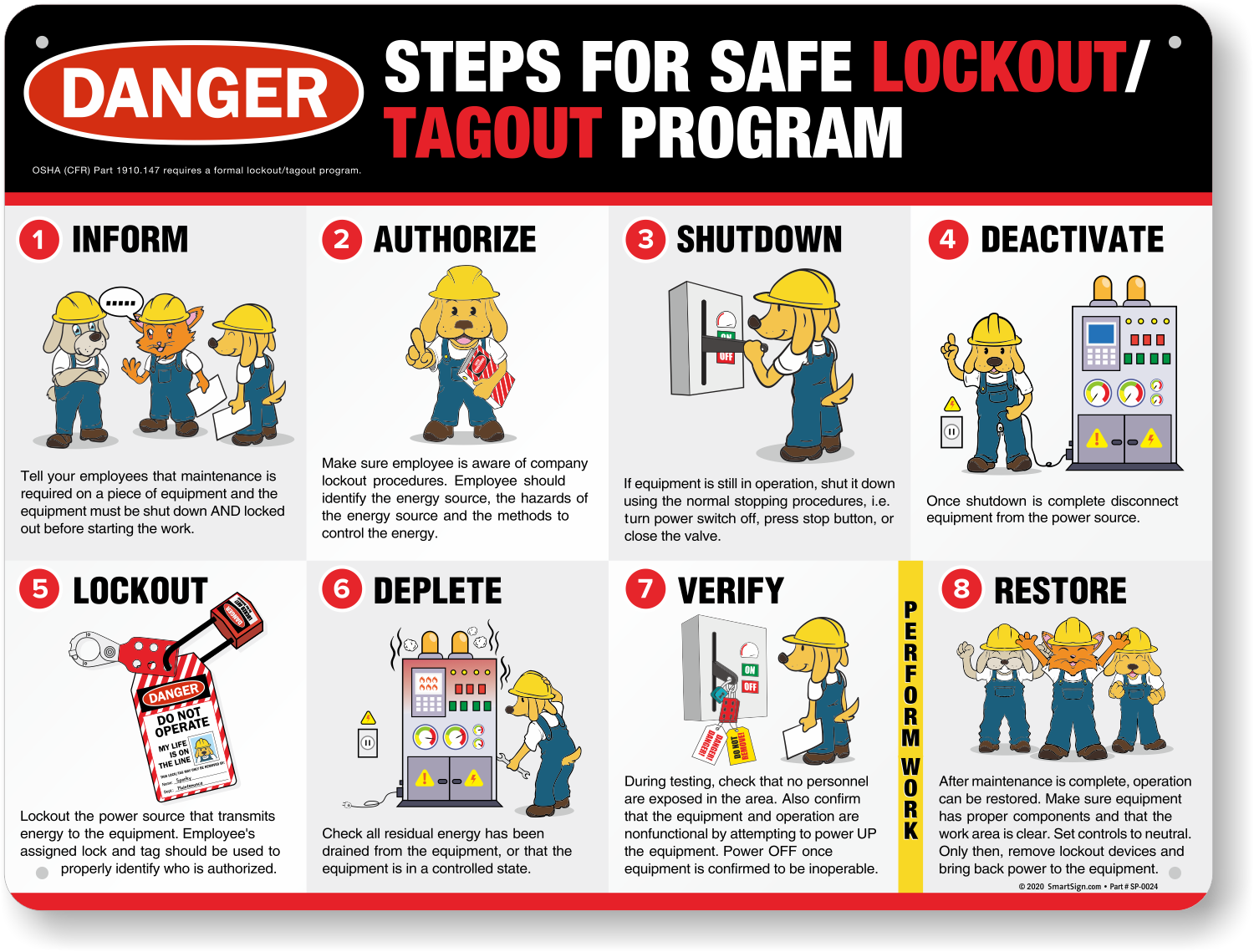
A log sheet isn’t a standalone tool. It’s part of a larger energy control ecosystem. To maximize impact:
- Train on the log, not just the lock
- Teach employees why each field matters. Turn logging into a ritual, not a chore.
- Audit logs quarterly
- Review 10% of entries monthly for completeness. Look for patterns: missing times, repeated errors.
- Link logs to permits and work orders
- In high-risk environments, require a work permit number on every log entry.
- Display logs near equipment
- Keep them visible. A log sheet stuffed in a drawer defeats the purpose.
- Rotate responsibility
- Assign a safety officer to review and sign off weekly logs. Adds oversight.
Pro Tip: Run a “log-off” drill: pick a machine, pull its log, and verify every lock on-site matches the record. Do this unannounced—it’s a powerful compliance check.
Limitations and What Log Sheets Can’t Do
While essential, log sheets aren’t foolproof. They have boundaries:
- They don’t replace training
- A perfect log won’t help if the technician doesn’t know how to isolate a hydraulic line.
- They can be falsified
- Without oversight, entries can be forged. Digital systems with biometric login reduce this risk.
- They don’t prevent human error
- A technician might lock out the wrong valve. The log only records what was claimed, not what was done.
Use logs as verification tools, not substitutes for proper procedure.
Final Thoughts: Make the Log Sheet a Living Document
A lockout tagout log sheet should never be an afterthought. It’s the backbone of traceable safety. Whether you use paper or digital, the goal is the same: create a clear, unbreakable chain of responsibility.
Start by auditing your current logging process. Are entries complete? Are logs archived? Can you reconstruct a lockout event from three weeks ago? If not, redesign your system now—before an incident forces the issue.
Choose a template that fits your workflow, train your team to treat logging as seriously as locking, and review entries regularly. Safety isn’t just about avoiding accidents. It’s about proving you did everything right, every time.
Frequently Asked Questions
What is the purpose of a lockout tagout log sheet? It documents who locked out equipment, when, why, and how, ensuring accountability and compliance during maintenance.
Does OSHA require a LOTO log sheet? OSHA doesn’t explicitly mandate logs, but it requires verification of procedures. A log sheet is the most practical way to prove compliance.
Who should fill out the LOTO log? The authorized employee performing the lockout must complete the log, including start and end times.
How long should LOTO logs be kept? Retain records for at least one year. Some industries or internal policies may require longer.
Can multiple people use the same log sheet? Yes, but each individual must complete their own entry when applying or removing a lock.
Should log sheets be kept on paper or digital? Both are acceptable. Digital systems offer better tracking and archiving, especially in large facilities.
What happens if a log sheet is missing or incomplete? It creates a compliance gap. During an inspection or incident, you may be cited for inadequate energy control procedures.
FAQ
What should you look for in Lockout Tagout Log Sheet Guide for Workplace Safety? Focus on relevance, practical value, and how well the solution matches real user intent.
Is Lockout Tagout Log Sheet Guide for Workplace Safety suitable for beginners? That depends on the workflow, but a clear step-by-step approach usually makes it easier to start.
How do you compare options around Lockout Tagout Log Sheet Guide for Workplace Safety? Compare features, trust signals, limitations, pricing, and ease of implementation.
What mistakes should you avoid? Avoid generic choices, weak validation, and decisions based only on marketing claims.
What is the next best step? Shortlist the most relevant options, validate them quickly, and refine from real-world results.