A locked machine isn’t always a safe machine—especially if no one knows it’s locked. That’s where lockout tagout signs step in. These aren’t just labels on a metal plate; they’re critical communication tools that stop accidental startups, prevent injuries, and maintain legal compliance. In high-risk industrial environments, a missing or unclear sign can turn routine maintenance into a catastrophe.
Lockout tagout (LOTO) signs serve as the first visible warning in an energy control procedure. They alert workers that equipment is isolated, under service, and should not be operated. While often grouped with tags and locks, signs play a unique role—they’re permanent, general warnings that set the stage for more specific lockout actions.
This article breaks down everything you need to know about lockout tagout signs: their function, design standards, placement strategy, and integration into workplace safety systems.
What Are Lockout Tagout Signs (And How Do They Differ From Tags?)
It’s common to confuse lockout signs with tagout tags. Both are part of the broader LOTO system, but they serve distinct purposes.
Lockout tagout signs are fixed or semi-permanent visual warnings installed near machinery or energy isolation points. They’re designed to inform all personnel that lockout procedures are in place or required in that area.
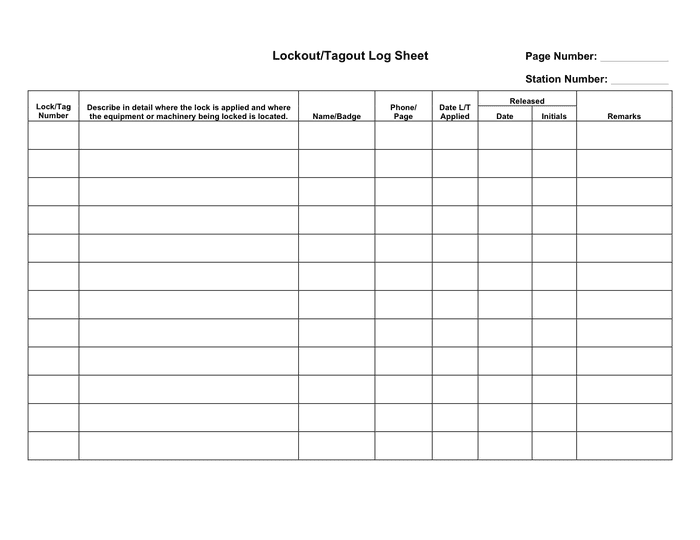
Tagout tags, on the other hand, are temporary, employee-specific labels attached directly to locks or energy-isolating devices. They include details like the worker’s name, date, department, and reason for lockout.
| Feature | Lockout Sign | Tagout Tag |
|---|---|---|
| Permanence | Permanent or semi-permanent | Temporary |
| Placement | Near equipment or zone | On lock or isolator |
| Personalization | General warning | Worker-specific info |
| Compliance Role | Awareness and zoning | Accountability and traceability |
For example: A large “Danger – Equipment Under Lockout” sign mounted near a conveyor system’s control panel is a lockout sign. A red tag clipped to a valve lock saying “Do Not Operate – John Miller, Maintenance, 6/5 8:00 AM” is a tagout tag.
Both are required under OSHA 29 CFR 1910.147, but signs enforce zone-wide awareness, while tags enforce individual accountability.
Why Lockout Tagout Signs Are Non-Negotiable
Skipping signs—or using vague or faded ones—is a shortcut that risks lives. Consider this real-world scenario:
A technician locks out a hydraulic press and begins repairs. A second worker, unaware of the maintenance, sees the machine off and assumes it’s safe to reset. Without a clear “Maintenance in Progress – Do Not Energize” sign, they restore power. The result: a trapped limb and a six-figure OSHA fine.
This isn’t hypothetical. According to the Bureau of Labor Statistics, failure to control hazardous energy causes nearly 10% of serious accidents in manufacturing. In most cases, inadequate signage was a contributing factor.
Key consequences of missing or ineffective lockout signs:
- Accidental energization: Workers restart equipment unknowingly.
- Delayed emergency response: Rescuers may not know energy sources are isolated.
- OSHA violations: Fines can exceed $15,000 per violation.
- Legal liability: In lawsuits, absence of signage weakens employer defense.
Signs don’t just warn—they create a culture of awareness. When every technician sees a standardized sign before approaching machinery, it reinforces the protocol automatically.
OSHA and ANSI Standards for Lockout Signs

Compliance isn’t optional. In the U.S., OSHA mandates that lockout tagout signs meet specific design and usage criteria. While OSHA doesn’t specify exact colors or wording, it references ANSI Z535.2 (2022) for safety sign standards, which most inspectors use as a benchmark.
Key Design Requirements
- Signal Word: Must use one of three:
- Danger – For immediate hazards that could cause death or serious injury.
- Warning – For potential hazards that could result in serious injury.
- Caution – For minor injuries or equipment damage.
For LOTO scenarios, “Danger” is typically appropriate.
- Color Coding:
- Red background with white text for “Danger”
- Orange background with black text for “Warning”
- Yellow background with black text for “Caution”
- Text Clarity:
- Use clear, bold fonts (e.g., Helvetica, Arial Black)
- Avoid jargon; use direct language like “Do Not Operate” or “Locked Out for Maintenance”
- Include pictograms where helpful (e.g., a lock symbol or hand stopping a switch)
- Durability: Signs must be weather-resistant, abrasion-resistant, and legible for years.
Example compliant message: > DANGER > EQUIPMENT UNDER LOCKOUT > DO NOT OPERATE > AUTHORIZED PERSONNEL ONLY
Failure to meet these standards may not trigger an automatic citation, but during an inspection, non-compliant signs are easy targets for enforcement.
Where to Place Lockout Tagout Signs for Maximum Effect
Strategic placement is as important as design. A sign buried behind a pipe or mounted at floor level won’t stop an accident.
Best practices for placement:
- At all energy isolation points: Circuit breaker panels, valve manifolds, disconnect switches.
- Near machine controls: Operators should see the sign before touching start buttons.
- At zone entrances: For large systems (e.g., production lines), post signs at entry points.
- At eye level: 48–60 inches from ground for optimal visibility.
- Multiple copies: Use duplicate signs in multi-access areas.
Common Mistake: Placing a single sign on a central control panel while ignoring individual machines. In a plant with 12 identical lathes, each must have its own signage—even if they’re fed from one panel.
Also, consider environmental factors: - In wet areas, use stainless steel or polycarbonate signs. - In high-heat zones (e.g., foundries), ensure adhesive or mounting won’t fail. - In noisy environments, signs compensate for poor verbal communication.
Top 5 Lockout Tagout Sign Solutions for Industrial Use
Not all signs are created equal. Here are five widely trusted options that meet OSHA and ANSI standards:
- Brady LOTO-10200 Danger Lockout Sign Kit
- - Pre-printed aluminum signs with UV-resistant printing
- - Includes multi-language options (English, Spanish, French)
- - Ideal for electrical panels and hydraulic systems
- Seton “Do Not Start” Magnetic Signs
- - Magnetic backing for temporary use on metal surfaces
- - Reusable and easy to deploy
- - Best for mobile equipment or shared workspaces
- National Safety Industries Universal LOTO Sign (NSI-97112)
- - Large 10" x 7" format with bold “Danger” header
- - Weatherproof vinyl material
- - Cost-effective for high-volume deployment
- Justrite Safety Solutions Custom LOTO Signage
- - Fully customizable text and layout
- - Durable anodized aluminum
- - Used in pharmaceutical and food processing plants
- DuraMark LOTO Pro System
- - Integrated with lockout stations and tag printers
- - Includes QR codes linking to lockout procedures
- - Digital tracking compatible

When selecting, consider: - Environment: Indoor vs. outdoor, chemical exposure - Language needs: Multilingual workforces require clear visuals - Integration: Can signs connect to digital LOTO logs?
Common Mistakes That Undermine LOTO Sign Effectiveness
Even compliant signs fail when misused. Here are frequent errors observed in audits:
- Faded or peeling signs: Sun exposure or chemical fumes degrade labels over time. Fix: Inspect quarterly and replace as needed.
- Generic wording: “Be Careful” does nothing. Fix: Use OSHA-recognized phrases like “Do Not Energize.”
- Over-reliance on memory: Assuming workers “know” the process. Fix: Signs must be present every time.
- One-size-fits-all approach: Using electrical lockout signs on pneumatic systems. Fix: Tailor messages to energy type.
- Ignoring visitor access: Contractors may not understand internal signage. Fix: Use universal symbols and conduct orientation.
A sign is only effective if it’s seen, understood, and respected.
Integrating Lockout Signs Into Your Safety Workflow
Signs shouldn’t exist in isolation. They’re part of a larger LOTO procedure. A robust workflow looks like this:
- Pre-shutdown meeting: Identify energy sources and assign responsibility.
- Post signs: Install general lockout signs at all access points.
- Isolate energy: Shut down and physically lock isolators.
- Attach tags: Each worker places their personal tag and lock.
- Verify isolation: Test for zero energy (e.g., try to start machine).
- Remove signs only after all locks are off: Never remove signs prematurely.
Supervisors should conduct random spot checks. If a sign is missing or ignored, it’s a sign (literally) of a broken system.
Final Thoughts: Make Signs a Habit, Not a Checklist
Lockout tagout signs are more than compliance items—they’re behavioral nudges. Every time a worker sees a red “Danger” sign, it reinforces a mindset: This machine is not just off. It’s protected.
Invest in high-visibility, durable signs. Place them where they can’t be missed. Train teams to treat them as inviolable. And audit them as rigorously as you audit PPE or fire extinguishers.
In safety, visibility saves lives. Make sure your lockout signs are impossible to ignore.
FAQ
What’s the difference between a lockout sign and a tagout tag? A lockout sign is a permanent or semi-permanent warning placed near equipment, while a tagout tag is a temporary, worker-specific label attached to a lock.
Do lockout signs need to be red? For “Danger” signs, yes—OSHA follows ANSI standards that require red backgrounds with white text for immediate hazards.
Can I make my own lockout signs? Yes, but they must meet ANSI Z535.2 standards for color, signal words, and durability. Custom signs from certified suppliers are recommended.
Where should lockout signs be placed? At all energy isolation points, machine controls, and zone entrances—mounted at eye level for clear visibility.
Are digital lockout signs acceptable? Only if they’re permanent, clearly visible, and meet ANSI design standards. Screens can fail; physical signs are more reliable.
Do lockout signs expire? They don’t have an expiration date, but must be replaced if faded, damaged, or illegible.
Can one sign cover multiple machines? Only if they’re part of a single energy control system. Otherwise, each machine needs its own sign to avoid confusion.
FAQ
What should you look for in Lockout Tagout Signs: Your First Line of Defense in Hazard Control? Focus on relevance, practical value, and how well the solution matches real user intent.
Is Lockout Tagout Signs: Your First Line of Defense in Hazard Control suitable for beginners? That depends on the workflow, but a clear step-by-step approach usually makes it easier to start.
How do you compare options around Lockout Tagout Signs: Your First Line of Defense in Hazard Control? Compare features, trust signals, limitations, pricing, and ease of implementation.
What mistakes should you avoid? Avoid generic choices, weak validation, and decisions based only on marketing claims.
What is the next best step? Shortlist the most relevant options, validate them quickly, and refine from real-world results.