Every year, hundreds of workers are injured or killed during equipment servicing—despite clear safety regulations. The root cause? Poor energy control. A lock out tag out (LOTO) register is not just paperwork; it's a frontline defense against accidental startups, unexpected releases of hazardous energy, and catastrophic failures. If your facility manages machinery, electrical systems, or process equipment, a functioning LOTO register isn't optional—it's a legal and operational necessity.
Yet too many organizations treat the register as a compliance checkbox, not a living document. That mindset leads to gaps in accountability, inconsistent enforcement, and preventable risks. This article breaks down what a LOTO register truly is, how it fits into your broader safety program, and the practical steps to build and maintain one that actually works.
What a Lock Out Tag Out Register Actually Does
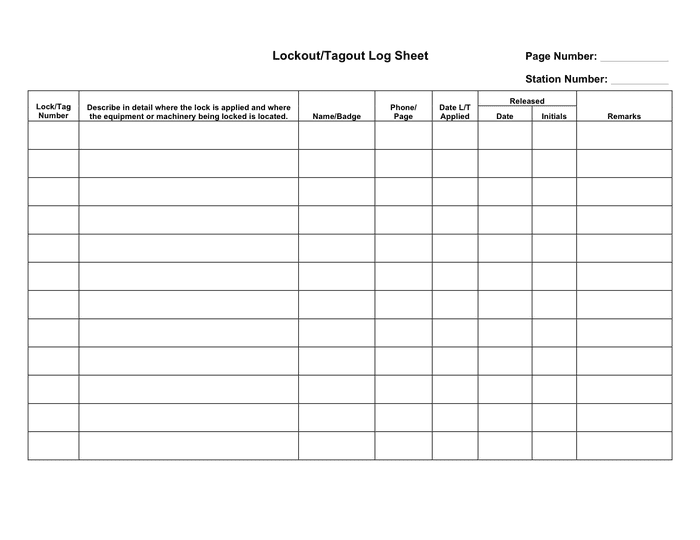
A lock out tag out register is a centralized, documented record of all energy control procedures within a facility. It doesn’t just list machines—it tracks how and when each piece of equipment is isolated, who is authorized to perform the lockout, and the specific steps required to ensure zero energy release during maintenance.
Think of it as the central nervous system of your energy control program. Without it, you’re relying on memory, verbal instructions, or scattered notes—none of which hold up under OSHA scrutiny or real-world chaos.
What’s included in a standard LOTO register: - Equipment identification (name, location, ID number) - Type of hazardous energy involved (electrical, hydraulic, pneumatic, thermal, etc.) - Step-by-step lockout and tagout procedures - Authorized employee list - Date of last review or update - Lockout device type used (padlocks, hasps, circuit breakers, etc.) - Verification method for de-energization
This isn’t a static archive. A well-maintained register evolves with changes in equipment, personnel, or processes. It’s audited regularly and accessible to safety officers, maintenance leads, and compliance teams.
Why a LOTO Register Isn’t Optional—Legally or Ethically
OSHA’s standard 29 CFR 1910.147 mandates a documented energy control program. A LOTO register is the foundational proof of compliance. Ignoring it isn’t just negligent—it’s a direct violation that can result in fines exceeding $15,000 per instance, plus criminal liability in cases of serious injury or fatality.
But beyond legal exposure, there’s a human cost. The Bureau of Labor Statistics reports that nearly 10% of workplace fatalities in manufacturing involve lockout failures. These aren’t abstract numbers—they’re missed birthdays, medical bills, and broken teams.
Consider a real incident: A technician at a packaging plant began cleaning a conveyor without verifying lockout. A colleague, unaware of the maintenance, reset a breaker remotely. The conveyor engaged, resulting in a crushed hand. Investigation revealed no centralized LOTO register, outdated procedures, and untrained personnel. The company paid over $300,000 in settlements and penalties.
This could have been avoided with a single, up-to-date register.
Common Mistakes That Render LOTO Registers Useless
Even companies with a register often fall into traps that undermine its value. Here are the most frequent failures:
❌ Treating It as a One-Time Project

Many create a register during an audit, then never update it. When new machinery is added or procedures change, the register becomes outdated—making it worse than useless. It creates a false sense of security.
Fix: Schedule quarterly reviews. Assign ownership to a safety coordinator or maintenance supervisor.
❌ Vagueness in Procedures Phrases like “isolate power” or “lock out main supply” are dangerously ambiguous. What main supply? Which isolation point? Without specificity, workers improvise—often incorrectly.
Fix: Use exact terminology. Example: “Turn off circuit breaker CB-32 in Panel B, verify zero voltage with a cat III multimeter, apply personal lock at disconnect switch DS-7.”
❌ No Access Control or Training Links If only one person knows where the register is or how to use it, you’ve created a single point of failure.
Fix: Store the register digitally with role-based access. Tie each procedure to training records—ensure only authorized personnel can initiate lockouts.
❌ Ignoring Minor Equipment Companies focus on large machines but overlook smaller devices—mixers, grinders, air compressors—that still pose serious risks.
Fix: Conduct a full equipment audit. Include every device that stores or uses hazardous energy, regardless of size.
How to Build an Effective LOTO Register: A Step-by-Step Workflow
Creating a functional register isn’t about volume—it’s about precision and usability. Follow this workflow:
Step 1: Conduct a Full Equipment Inventory Walk every floor. List all machines, control panels, and energy sources. Assign a unique ID to each. Don’t skip auxiliary systems like pumps or ventilation fans.
Step 2: Map Energy Sources For each piece of equipment, identify every energy type: - Electrical - Hydraulic - Pneumatic - Chemical - Gravitational - Thermal
Document isolation points—disconnects, valves, bleeds, etc.
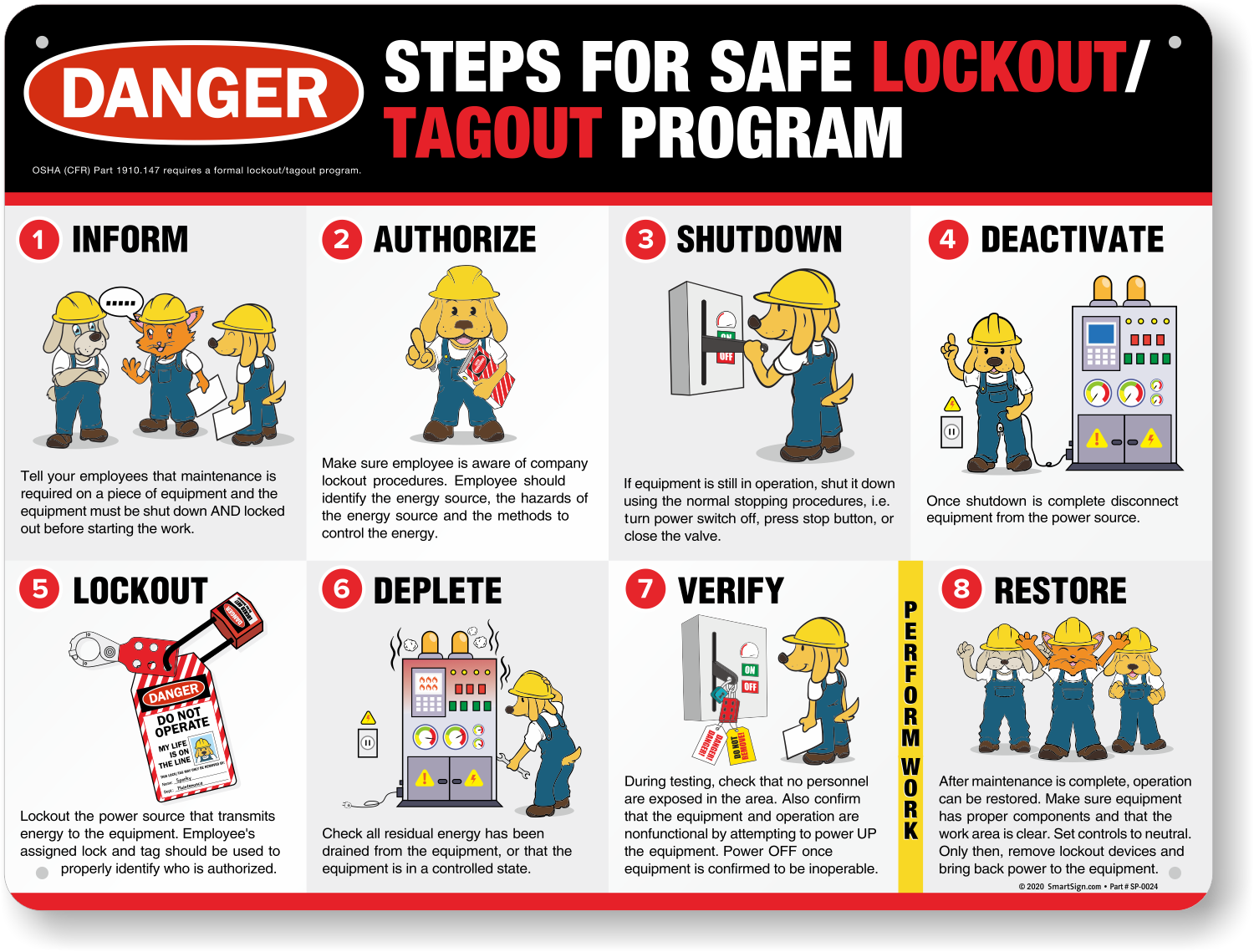
Step 3: Develop Machine-Specific Procedures Write step-by-step LOTO procedures. Include:
- Preparation steps
- Shutdown sequence
- Isolation points
- Lockout application
- Stored energy release (e.g., bleeding lines, capacitor discharge)
- Verification of de-energization
- Removal steps
Use diagrams or photos where helpful.
Step 4: Assign Authorized Employees Only trained personnel should perform lockouts. List names, roles, and training dates. Update this section whenever someone joins, leaves, or renews certification.
Step 5: Centralize and Digitize Use a digital platform (see options below) to store the register. Enable search, version control, and audit trails. Print physical copies only as backups.
Step 6: Review and Audit Quarterly Schedule formal reviews. Test a random sample of procedures. Observe actual lockout events. Update the register immediately when discrepancies arise.
Top 5 Digital Tools for Managing a LOTO Register
While paper registers exist, digital solutions drastically improve compliance, accessibility, and traceability. Here are five proven platforms:
| Tool | Key Features | Best For |
|---|---|---|
| EHS Insight | Cloud-based LOTO module, procedure builder, mobile access, audit trails | Mid to large facilities needing integration with broader EHS systems |
| IndustrySafe | Customizable LOTO forms, employee training tracking, automated reminders | Companies with frequent personnel changes |
| SiteDocs | Real-time sync, offline mobile use, photo attachments, workflow automation | Field-heavy operations (mining, construction, utilities) |
| Cority | Enterprise-scale compliance tracking, AI-assisted risk assessment, reporting dashboards | Large industrial complexes with multiple sites |
| LockOut/TagOut Pro | Simple interface, barcode scanning for equipment, audit-ready reports | Small to mid-sized manufacturers on a budget |
Choose a tool that fits your scale and tech infrastructure. The goal is usability—not complexity.
Real-World Use Cases: When the LOTO Register Saved the Day
Case 1: Brewery Prevents Chemical Exposure During a CIP (clean-in-place) system upgrade, a technician needed to service a valve carrying caustic soda. The LOTO register specified dual isolation: electrical lockout on the pump and hydraulic bleed on the line. The technician followed the steps, avoided a 5000 psi chemical spray, and reported a missing bleed valve—prompting an update to the procedure.
Case 2: Auto Plant Avoids Fatality A robot cell required reprogramming. The register listed three isolation points: main power, hydraulic supply, and air assist. A new technician almost skipped the air line, assuming it was passive. The register’s step-by-step checklist stopped him. Post-review, the team added a warning note: “Air assist remains pressurized even when powered down.”
These aren’t edge cases—they’re proof that a detailed register changes behavior.
Integration with Broader Safety Systems
A LOTO register shouldn’t live in isolation. It must connect with: - Training records: Confirm each authorized employee has completed LOTO training. - Permit-to-work systems: Require register verification before issuing maintenance permits. - Incident reporting: If a near-miss occurs during lockout, cross-reference the register to find gaps. - Preventive maintenance schedules: Sync lockout needs with planned downtime.
When integrated, the register becomes a proactive tool—not just a reactive record.
Final Thought: A Register Is Only as Good as Its Use
A perfect LOTO register locked in a drawer does nothing. A flawed one used daily can still save lives. But a living register—updated, accessible, and enforced—transforms safety culture.
Start today: audit your current documentation. Identify one machine missing from your register. Write its procedure with military precision. Train one team member. Repeat.
Compliance isn’t the goal. Protection is. And the register is your most reliable weapon.
Frequently Asked Questions
What is the difference between a LOTO register and a LOTO procedure? A LOTO procedure is a step-by-step guide for isolating a specific machine. The register is the master list that catalogs all procedures, authorized personnel, and equipment.
Who is responsible for maintaining the LOTO register? Typically, the safety manager or maintenance supervisor. However, input should come from operations, engineering, and frontline technicians.
How often should a LOTO register be reviewed? At minimum, annually. Best practice is quarterly, or immediately after an incident, near-miss, or equipment change.
Can a LOTO register be digital? Yes—and it should be. Digital registers improve accessibility, searchability, and version control, especially in large or multi-site facilities.
Do small businesses need a LOTO register? Yes. OSHA’s LOTO standard applies to all employers with hazardous energy risks, regardless of company size.
What happens if OSHA inspects and finds no register? You’ll face citations and fines. More critically, any worker injury during servicing may be deemed preventable, increasing liability.
Can photos be included in a LOTO register? Absolutely. Visual aids like tagged isolation points or lock placement significantly improve clarity and reduce errors.
FAQ
What should you look for in What Is a Lock Out Tag Out Register and Why It Matters? Focus on relevance, practical value, and how well the solution matches real user intent.
Is What Is a Lock Out Tag Out Register and Why It Matters suitable for beginners? That depends on the workflow, but a clear step-by-step approach usually makes it easier to start.
How do you compare options around What Is a Lock Out Tag Out Register and Why It Matters? Compare features, trust signals, limitations, pricing, and ease of implementation.
What mistakes should you avoid? Avoid generic choices, weak validation, and decisions based only on marketing claims.
What is the next best step? Shortlist the most relevant options, validate them quickly, and refine from real-world results.