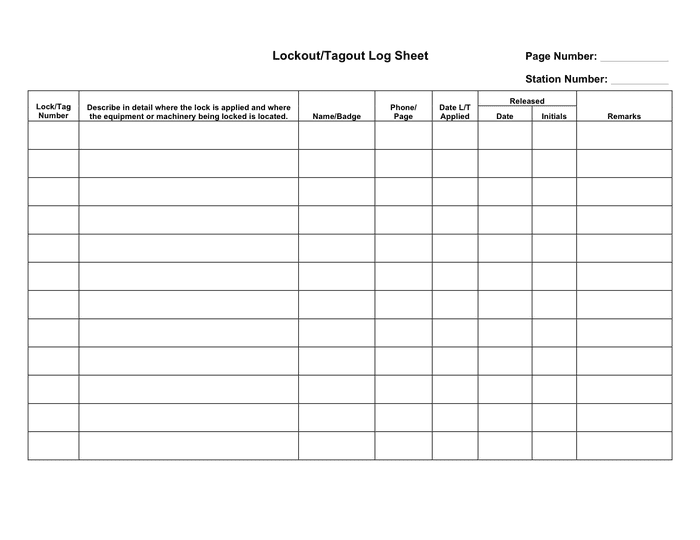
When machinery powers down, the danger doesn’t always follow. Every year, preventable injuries occur during maintenance because energy sources aren’t properly isolated. The solution? A reliable lockout tagout (LOTO) procedure template that’s not just compliant with OSHA—but practical on the shop floor.
A well-structured LOTO procedure isn’t a one-size-fits-all checklist. It’s a site-specific, machine-by-machine guide that ensures every step of hazardous energy isolation is documented, understood, and verified. More than a regulatory box to check, it’s a living document that protects lives.
This guide breaks down how to build and implement a lockout tagout procedure template that works—complete with real examples, common flaws to avoid, and key components every plan must include.
Why a Generic LOTO Template Isn't Enough
Many companies download a free lockout tagout template from the internet, fill in a few blanks, and call it a day. That’s a critical mistake.
A generic template may meet the basic structure OSHA expects, but it fails when it matters most: during actual maintenance. If the procedure doesn’t align with the machine’s unique energy sources—electrical, hydraulic, pneumatic, gravitational, or thermal—the risk of accidental startup remains high.
Example: A conveyor system might have electrical power (obvious), but also tensioned belts (stored mechanical energy) and gravity-fed rollers. A template that only lists “turn off power” misses two hazard zones.
The best LOTO templates are: - Machine-specific - Visually supported (with diagrams or photos) - Written in clear, actionable language - Verified by authorized employees
Templates should be treated like operating manuals—not static PDFs buried in a safety folder.
Core Elements of a Lockout Tagout Procedure Template
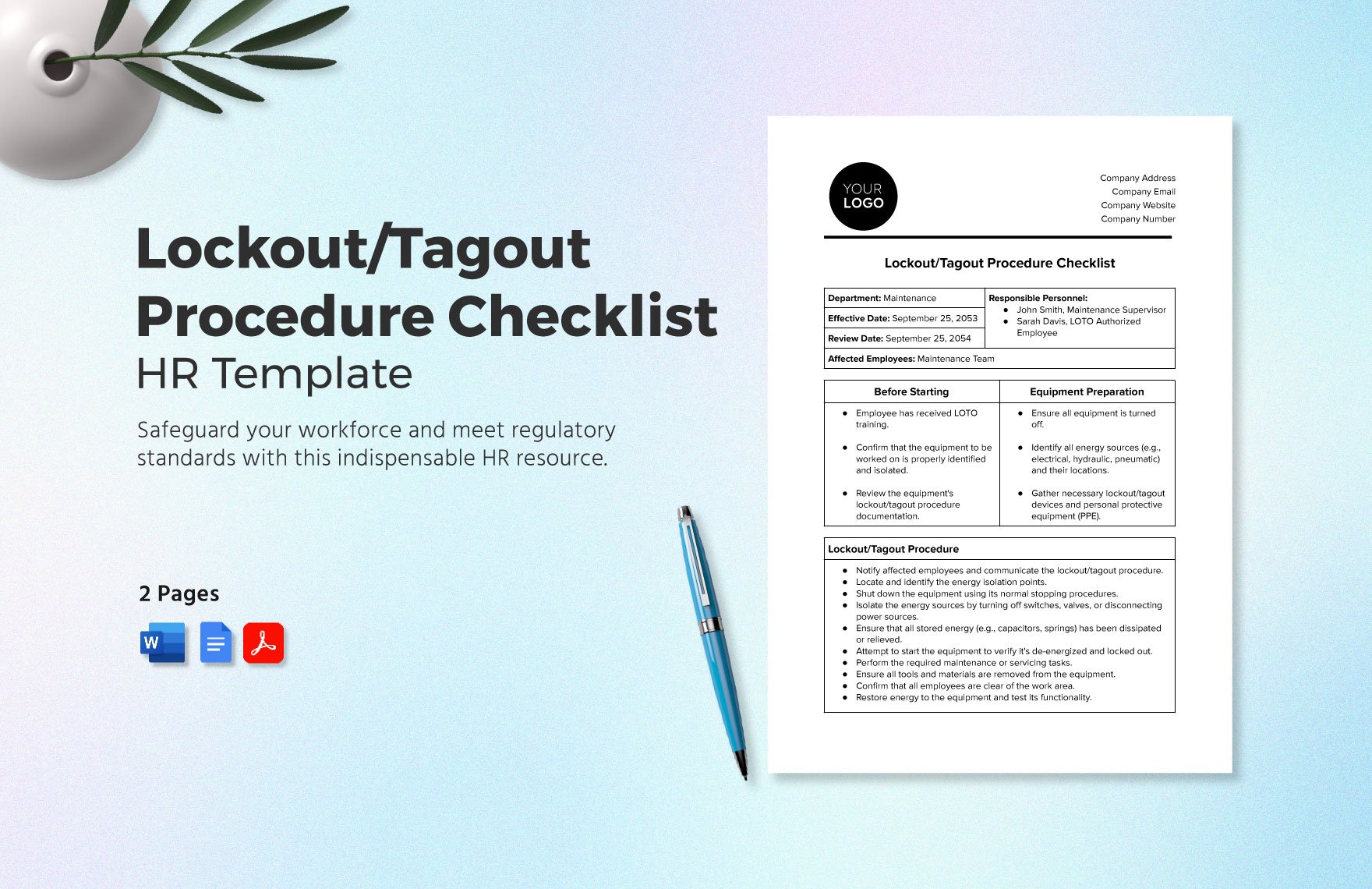
A compliant and effective LOTO procedure must include seven non-negotiable components. Use this framework to audit or build your template.
#### 1. Machine or Equipment Identification Clearly state the equipment name, ID number, and location. Ambiguity kills. Example: “Vertical Milling Machine – Model VM-200, Station 3, North Workshop.”
#### 2. Energy Source Inventory List every energy source the machine uses or stores: - Electrical (voltage level) - Pneumatic (air lines) - Hydraulic (fluid pressure) - Chemical (fuel lines) - Gravitational (elevated parts) - Thermal (heated elements)
Tip: Include isolation points like circuit breakers, valve handles, or bleed screws.
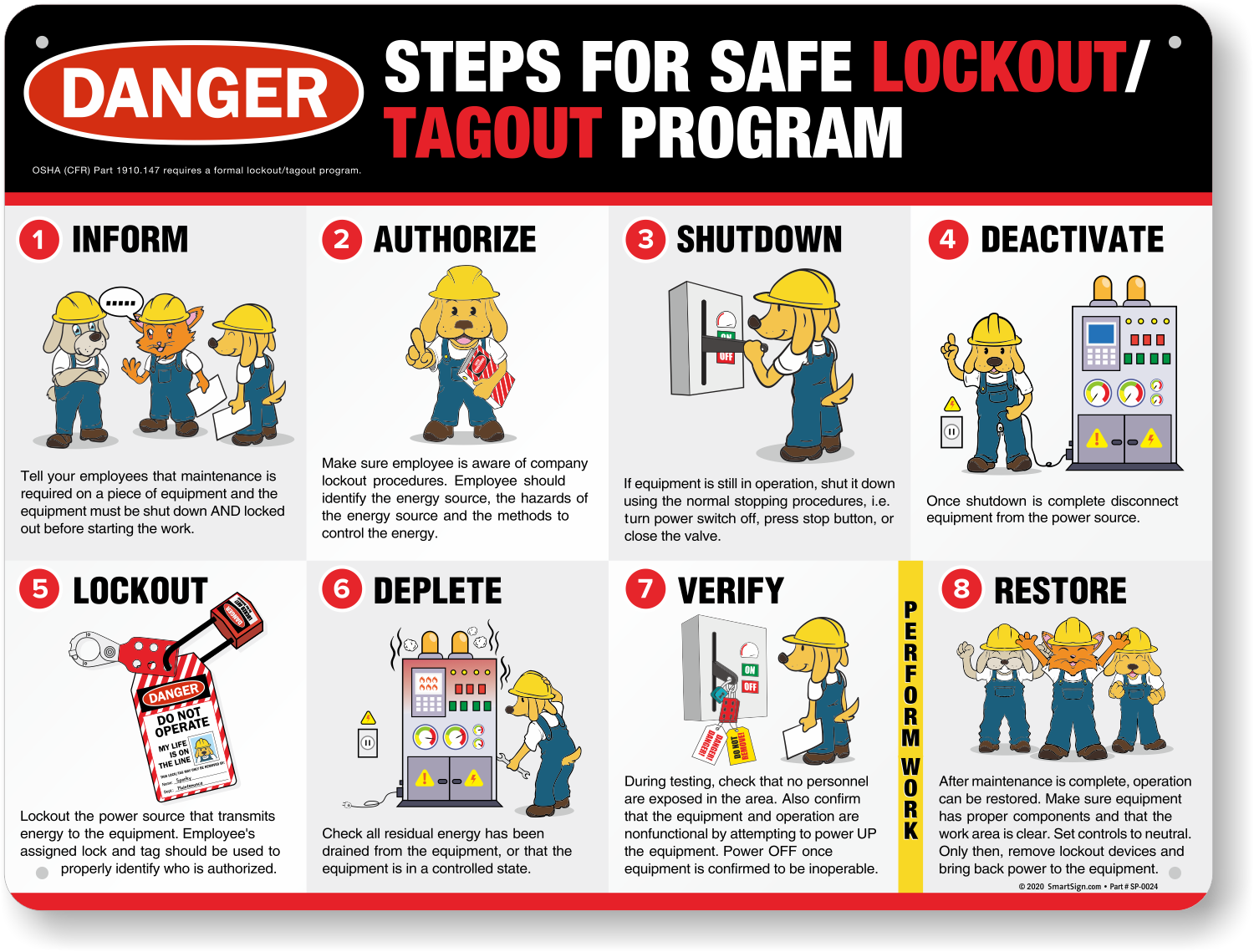
#### 3. Shutdown Instructions Step-by-step shutdown process before lockout begins: - Notify affected employees - Stop machine via normal controls - Allow moving parts to fully stop - Depressurize lines or drain fluids if applicable
Common Mistake: Assuming “off” means safe. Many energy sources remain active even after shutdown.
#### 4. Isolation Points and Lock Application Specify exactly where locks and tags must be applied: - Main disconnect switch - Hydraulic line valve - Air supply shutoff
List the type of lock (e.g., hasp, valve lockout, plug lock) and who applies it.
Pro Tip: Use photos or schematics to mark isolation points. A picture reduces confusion during high-pressure maintenance.
#### 5. Stored Energy Release Detail how residual energy is safely dissipated: - Bleeding hydraulic lines - Discharging capacitors - Lowering suspended loads - Cooling heated surfaces
Include verification methods—like using a voltage tester or pressure gauge.
#### 6. Verification of Isolation This is the most critical step—and most often skipped.
The procedure must require the authorized employee to: - Attempt to restart the machine (after ensuring no one is near) - Confirm zero energy via test instruments - Document verification in writing
Without this step, the lockout is incomplete.
#### 7. Removal and Restart Protocol Outline how locks are removed and equipment returned to service: - Only the original lock applier may remove it (unless under formal transfer procedures) - Confirm all tools are removed - Notify affected employees before restart - Restore energy sources in reverse order
Real-World Example: LOTO Template for a Hydraulic Press
Let’s see how this works in practice.
Equipment: 50-Ton Hydraulic Press, Line B, Stamping Dept Energy Sources: - 480V Electrical (Main Disconnect: Panel B4) - Hydraulic System (Pressure: 2,500 psi, Valve: HV-07) - Stored Mechanical Energy (Ram Spring)
Procedure Steps:
- Notify all affected workers that maintenance is starting.
- Press emergency stop and select “Maintenance Mode” on control panel.
- Allow ram to fully lower; confirm position via indicator.
- Close hydraulic shutoff valve HV-07 and bleed line using relief port.
- Open main disconnect switch at Panel B4.
- Apply personal lock and tag to disconnect and valve lockout device.
- Use pressure gauge to verify 0 psi in hydraulic line.
- Test for zero energy: attempt restart at control panel (no movement).
- Begin maintenance.
Release Steps: - Remove tools and confirm no personnel near machine. - Unlock and close HV-07 valve. - Close disconnect and remove lock. - Notify team and restore control to operational mode.
This isn’t a theoretical form—it’s a script for survival.
Common LOTO Template Mistakes That Create Risk
Even compliant templates can fail in execution. Watch for these red flags:
- Overgeneralized Language:
- “Lock out power source” is too vague. Better: “Apply lock to 480V disconnect labeled ‘Press-7’ inside Panel 12.”
- Missing Stored Energy Steps:
- 40% of LOTO incidents involve uncontrolled release of stored energy. If your template doesn’t address it, it’s incomplete.
- No Verification Step:
- OSHA requires positive verification. If it’s not written in the procedure, it likely won’t happen.
- One Template for Multiple Machines:
- Never use the same procedure for a lathe and a packaging line. Each has unique risks.
- Outdated After Modifications:
- Machines evolve. If a new hydraulic line is added, the LOTO template must be revised and retrained.
A strong template evolves with the equipment.
How to Customize Your Lockout Tagout Template
Start with a universal LOTO template as a foundation—but customize aggressively.
Step 1: Conduct a machine-specific hazard audit. Walk through each piece of equipment with maintenance leads and safety officers. Map all energy sources and control points.
Step 2: Draft the procedure using plain language. Avoid jargon. If a new technician can’t follow it, rewrite it.
Step 3: Add visuals. Photos, diagrams, or QR codes linking to video demos significantly improve compliance.
Step 4: Train and validate. Have authorized employees perform a mock lockout using the template. Observe for confusion or gaps.
Step 5: Review annually—or after any incident, near-miss, or equipment change. LOTO isn’t “set and forget.”
Digital vs. Paper-Based LOTO Templates: What Works Best?
While OSHA doesn’t require digital systems, modern operations are shifting toward digital LOTO management for accuracy and traceability.
| Format | Pros | Cons |
|---|---|---|
| Paper Templates | Low cost, no tech needed, OSHA-compliant | Easy to lose, hard to update, no audit trail |
| Digital Templates (Tablets/Apps) | Real-time updates, photo integration, lock verification logs | Requires training, upfront cost, device dependency |
Best Practice: Use digital for complex or high-risk equipment. Keep printed backups in controlled lockers for emergencies.
Some companies use hybrid models—digital for creation and storage, printed copies at machine stations.
Essential Tools to Support Your LOTO Procedure
A template is only as strong as the tools backing it. Equip your team with:
- Lockout Hasps and Group Lockboxes – Allow multiple workers to apply individual locks during team maintenance.
- Valve and Plug Lockouts – Prevent accidental re-energizing of fluid lines.
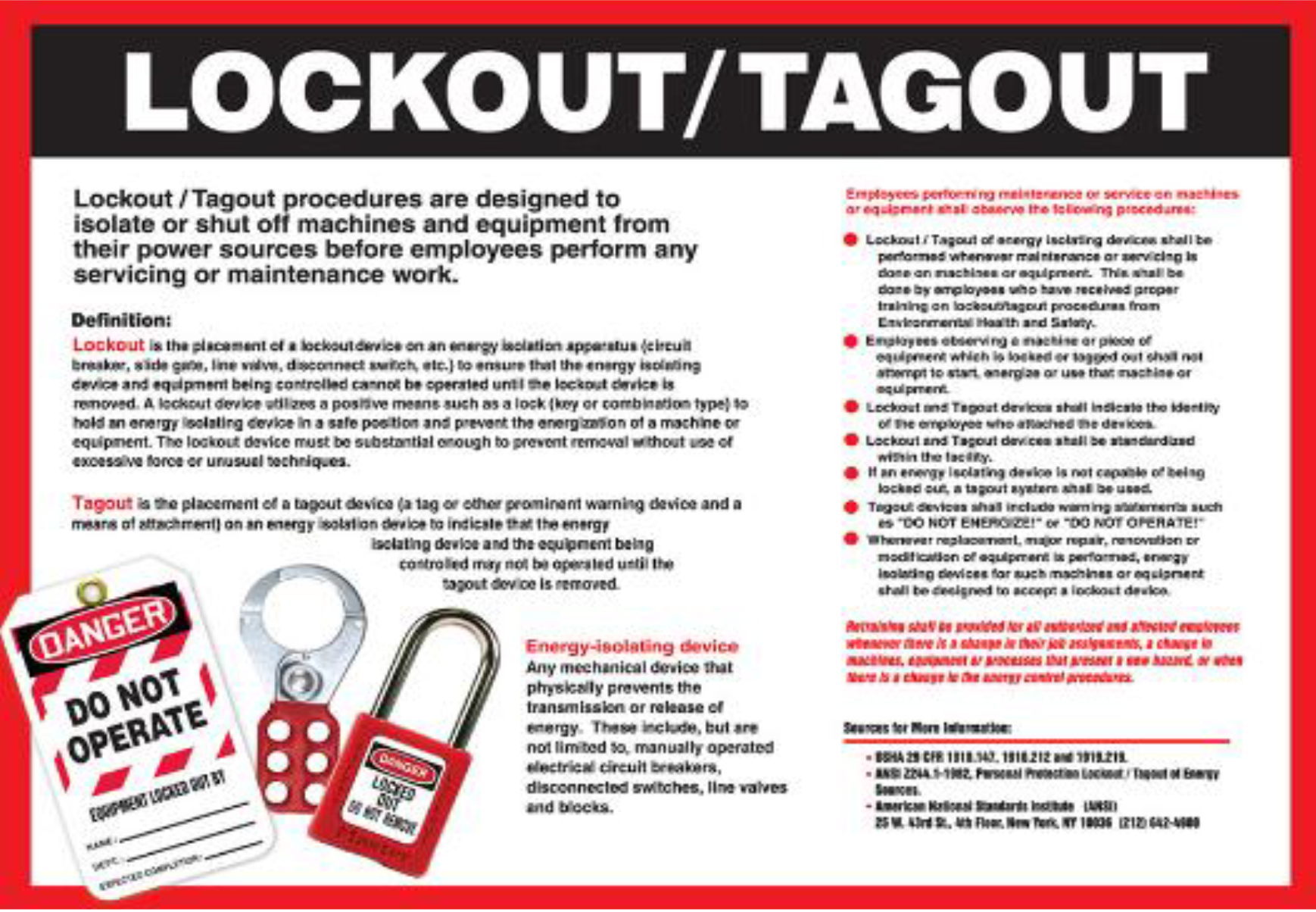
- Tagout Tags with Durable Lamination – Must include employee name, date, reason, and department.
- Voltage Testers and Pressure Gauges – Required for verification.
- Master Key Systems (with strict controls) – For emergency lock removal, only under documented procedures.
Never allow padlocks without employee-specific keys or combinations.
Make Your LOTO Template Actionable Today
A lockout tagout procedure template isn’t a compliance artifact—it’s a frontline defense against catastrophic injury. The best templates are specific, visual, and verified. They turn complex energy control into repeatable, foolproof steps.
Start by auditing one high-risk machine. Build a complete LOTO procedure using the seven core elements. Train your team on it. Test it. Refine it.
Then repeat.
Your template should live at the machine, not in a binder. It should be revised, not archived. And above all, it should be followed—every single time.
Because when the pressure’s on and the clock’s ticking, a clear, reliable procedure is the only thing standing between a safe repair and a life-altering accident.
Frequently Asked Questions
What should a lockout tagout procedure template include? It must list equipment ID, energy sources, shutdown steps, isolation points, stored energy release methods, verification of de-energization, and restart protocol.
Can I use the same template for multiple machines? No. Each machine has unique energy sources and control points. Use individualized procedures for safety and compliance.
Who is responsible for creating LOTO procedures? The employer is responsible. Typically, safety officers, maintenance supervisors, and authorized employees collaborate on development.
How often should LOTO procedures be reviewed? Annually, or whenever equipment is modified, after an incident, or if a near-miss reveals a flaw.
Do tags alone comply with OSHA? No. Tags are secondary. OSHA requires physical lockout devices that prevent energizing, unless tagout-only is justified under strict conditions.
Can LOTO procedures be digital? Yes. Digital formats are acceptable if they’re accessible, secure, and include all required elements.
What’s the most commonly missed step in LOTO? Verification of isolation. Many workers apply locks but skip testing to confirm zero energy.
FAQ
What should you look for in Lockout Tagout Procedure Template: A Complete Guide? Focus on relevance, practical value, and how well the solution matches real user intent.
Is Lockout Tagout Procedure Template: A Complete Guide suitable for beginners? That depends on the workflow, but a clear step-by-step approach usually makes it easier to start.
How do you compare options around Lockout Tagout Procedure Template: A Complete Guide? Compare features, trust signals, limitations, pricing, and ease of implementation.
What mistakes should you avoid? Avoid generic choices, weak validation, and decisions based only on marketing claims.
What is the next best step? Shortlist the most relevant options, validate them quickly, and refine from real-world results.