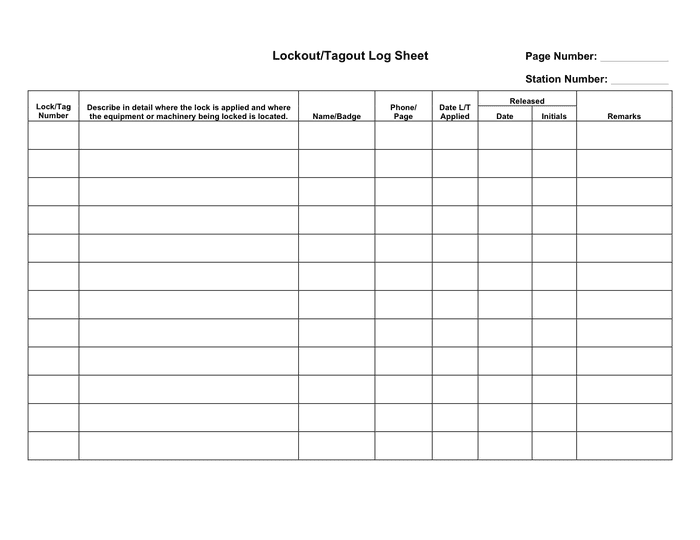
Workers reach for machinery controls every day without realizing the hidden danger lurking beneath an unsecured power source. A moment of oversight during maintenance can lead to startup accidents, electrocution, or crushing injuries. Lockout tagout safety signs are not just regulatory checkboxes—they’re frontline defenses in high-risk environments. These signs communicate critical warnings, guide safe procedures, and reinforce a culture of accountability during energy isolation.
Despite their simplicity, improper use or missing signage undermines entire lockout tagout (LOTO) programs. Many organizations install signs as an afterthought, only to face audit failures or, worse, injuries. The truth is, a well-designed LOTO sign does more than warn—it instructs, documents, and protects.
Why Lockout Tagout Safety Signs Are Non-Negotiable
OSHA’s Control of Hazardous Energy standard (29 CFR 1910.147) mandates that energy-isolating devices be physically locked and tagged during servicing. Tags must clearly state: “Do Not Start,” “Do Not Open,” or similar unambiguous warnings. But compliance isn’t just about meeting regulations—it’s about preventing harm.
Consider this: In a 2022 OSHA report, over 10% of serious manufacturing incidents involved improper lockout procedures. In nearly half of those cases, missing or inadequate signage contributed to the error. A tag without a visible, durable sign increases the risk of accidental re-energization—especially in noisy, shift-heavy facilities.
Safety signs serve three core purposes: - Visibility: They draw attention in cluttered or high-activity areas. - Clarity: They provide instant understanding, even across language barriers. - Accountability: They identify the authorized employee who applied the lock.
Without these elements, a LOTO program risks becoming a procedural formality rather than a protective system.
Key Elements of an Effective Lockout Tagout Sign
Not all signs are created equal. A compliant and effective LOTO sign must include specific components to fulfill its role.
Mandatory Information to Include
- Warning phrase: “Danger – Do Not Operate” or “Lockout in Progress”
- Employee name: The authorized person who applied the lock
- Department or shift: For traceability
- Date and time: When the lock was applied
- Equipment ID: Specific machine or system being serviced
- Hazard type: Electrical, mechanical, hydraulic, etc.
Using standardized symbols—like a padlock icon or lightning bolt for electrical danger—enhances comprehension, especially in multilingual workplaces. ANSI Z535.5 provides guidelines for safety tag and sign design, recommending red, black, and white color schemes for danger tags.
Material and Durability Considerations In wet, oily, or outdoor environments, flimsy paper tags deteriorate quickly. Durable materials like laminated polyester, vinyl, or aluminum ensure legibility throughout the work period. Magnetic or adhesive-backed tags work well on control panels, while flag-style tags attach directly to valves or switches.
A plant in Ohio once experienced a near-miss when a handwritten tag smeared in a steam-filled boiler room. Switching to water-resistant vinyl tags eliminated the issue and improved audit scores.
Where to Place Lockout Tagout Signs for Maximum Impact
Location determines effectiveness. A misplaced sign is as dangerous as no sign at all.
Primary Placement Zones
- On the energy-isolating device: Directly on disconnects, circuit breakers, or valve handles
- At operator control stations: Push buttons, HMI screens, or start panels
- At system entry points: Where pipelines or power lines feed into equipment
- Line-of-sight from multiple angles: Especially in large machinery with multiple access points
For complex systems—like conveyor networks or chemical processing lines—multiple tags may be needed. A single LOTO event can involve 10+ locks and tags applied by different technicians. In these cases, a group lockout station with a central hasp and individual tags improves coordination.
Avoid common mistakes: - Placing tags too far from the isolation point - Using generic labels like “Machine Down” - Attaching signs to moving parts or insulated surfaces
A food processing facility reduced LOTO errors by 70% after implementing color-coded tags by department and requiring photo verification during safety audits.
How Lockout Tagout Signs Fit Into the Full LOTO Procedure
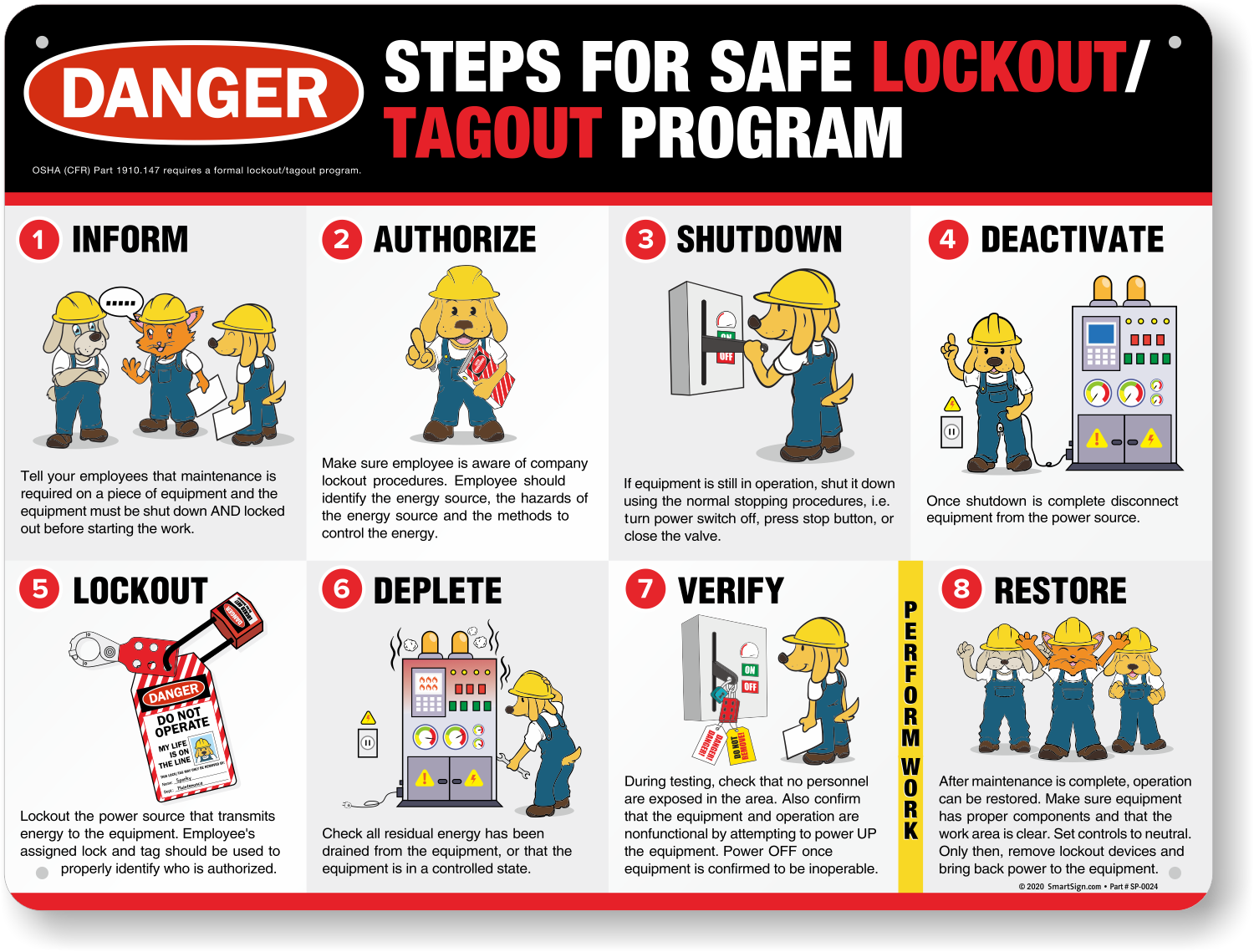
Signs are just one part of a six-step OSHA-recommended process:
- Preparation: Identify energy sources and required controls
- Notification: Inform affected employees of the shutdown
- Shutdown: Use normal stopping procedures
- Isolation: Deactivate all energy sources
- Application of locks and tags: Attach device-specific locks and detailed tags
- Verification: Attempt to restart (de-energized) to confirm isolation
The sign becomes critical in step 5. It documents who is responsible and warns others not to interfere. During verification, the technician checks that every tag corresponds to an active lock and that no bypass attempts are possible.
In high-turnover environments, digital LOTO systems now integrate QR-coded tags. Scanning the code pulls up the worker’s certification status, work permit, and expected release time—adding traceability without slowing the process.
Common Mistakes That Undermine LOTO Sign Effectiveness Even experienced teams make avoidable errors.
1. Using Blank or Generic Tags Writing “Under Maintenance” with no name or date renders the tag useless during shift changes. OSHA requires accountability.
2. Tagging Over Locks A tag should be attached before or alongside the lock—not hidden beneath it. Visibility is compromised if the warning isn’t readable.
3. Reusing Tags Single-use tags prevent confusion. Reusing a tag suggests a previous lockout is still active, creating false assumptions.
4. Poor Language or Font Size If the sign can’t be read from 6 feet away, it fails. Use bold, sans-serif fonts and, when possible, include pictograms.
5. Ignoring Environmental Factors UV exposure fades ink. Grease buildup obscures text. Choose weather-resistant materials for outdoor or harsh indoor settings.

One refinery avoided a potential explosion after a worker noticed a faded tag on a valve. The replacement sign revealed a forgotten lockout from the previous shift—preventing a catastrophic startup.
Custom vs. Standard Lockout Tagout Signs
Facilities face a choice: use off-the-shelf signs or customize for their operations.
Standard Signs - Pros: Low cost, readily available, OSHA-compliant wording - Cons: Limited flexibility, may not match specific equipment
Custom Signs - Pros: Include equipment IDs, multilingual text, company branding, QR codes - Cons: Higher upfront cost, longer lead time
For most mid-to-large operations, a hybrid approach works best. Use standard tags for routine tasks and custom versions for critical or complex systems. A pharmaceutical manufacturer, for example, uses custom bilingual tags on sterile processing units to ensure clarity across shifts.
Integrating Digital Tools with Physical LOTO Signs
Technology is reshaping lockout compliance. Smart tags with RFID or NFC chips link physical signs to digital workflows.
When a technician scans a tag, the system logs: - Employee ID - Time of lock application - Equipment status - Required PPE - Expected completion time
Supervisors receive alerts if a lock remains past its scheduled removal or if an unauthorized person attempts access. These systems reduce paperwork, improve audit trails, and integrate with CMMS platforms.
However, digital tools don’t replace physical signs. OSHA still requires visible, legible tags on-site. The best systems combine durable physical tags with backend digital tracking—merging compliance with modern workflow needs.
Choosing the Right Lockout Tagout Signs for Your Facility
Selecting the right signs depends on your environment, workforce, and equipment complexity.
| Feature | Recommended Option |
|---|---|
| High moisture areas | Vinyl or polyester tags |
| Outdoor equipment | UV-resistant aluminum signs |
| Multilingual teams | Bilingual tags with symbols |
| Complex systems | Custom tags with QR codes |
| High-volume use | Bulk packs of standard tags |
Top suppliers include: - Grainger: Wide range of OSHA-compliant tags and kits - Seton: Customizable options with fast turnaround - Brady Corporation: Durable, tech-integrated solutions - Master Lock: Trusted brand with LOTO bundles - Spartan Safety: Affordable, high-visibility options
When evaluating, test sample tags for durability, readability, and ease of attachment. A $0.50 tag that peels off in two days costs more in risk than a $2 durable alternative.
Final Thoughts: Signs Are More Than Warnings—They’re Protection
Lockout tagout safety signs are not just pieces of plastic or metal. They are declarations of safety, accountability, and procedure. When properly designed, placed, and maintained, they prevent incidents before they start.
Don’t treat them as compliance accessories. Invest in durable, clear, and traceable signage. Train teams to use them correctly. Audit their use regularly. Make every tag a reflection of your safety culture.
Start today: Audit your current LOTO signs. Replace faded, generic, or missing tags. Ensure every authorized employee has access to proper materials. Turn every lockout into a visible, verifiable act of protection.
FAQ
What should you look for in Lockout Tagout Safety Signs: Purpose, Placement, and Compliance? Focus on relevance, practical value, and how well the solution matches real user intent.
Is Lockout Tagout Safety Signs: Purpose, Placement, and Compliance suitable for beginners? That depends on the workflow, but a clear step-by-step approach usually makes it easier to start.
How do you compare options around Lockout Tagout Safety Signs: Purpose, Placement, and Compliance? Compare features, trust signals, limitations, pricing, and ease of implementation.
What mistakes should you avoid? Avoid generic choices, weak validation, and decisions based only on marketing claims.
What is the next best step? Shortlist the most relevant options, validate them quickly, and refine from real-world results.