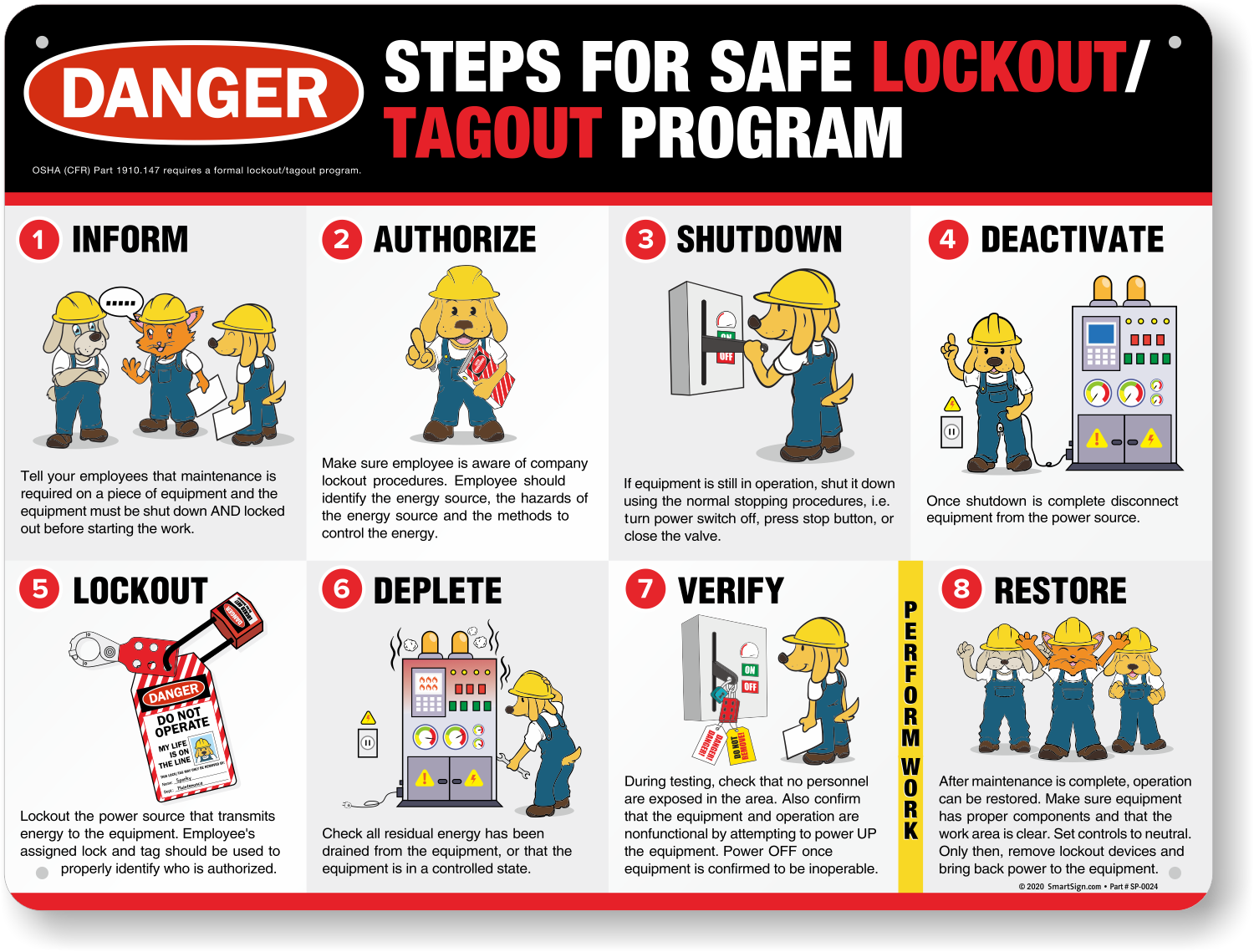
You can read OSHA’s 10-page lockout tagout (LOTO) standard, but one clear image of a tagged valve or locked circuit breaker often communicates more in seconds. In high-risk environments—manufacturing floors, utility plants, maintenance bays—a well-documented visual of LOTO applied to equipment isn’t just helpful. It’s a frontline defense against injury, miscommunication, and regulatory failure.
The moment a technician sees a lock and tag on a machine, they understand: this is de-energized and under service. A picture of lockout tagout on equipment reinforces that message across training, audits, and daily operations. More than a compliance checkbox, it’s a visual contract of safety.
Yet poor visuals—blurry photos, misleading setups, or incomplete tagging—do more harm than good. They create false confidence. This article breaks down how to use, interpret, and create effective LOTO visuals that drive real-world safety outcomes.
The Role of Visuals in Lockout Tagout Programs
Visual learning dominates industrial safety training. The brain processes images 60,000 times faster than text. In a fast-paced environment where split-second decisions matter, a well-placed picture of lockout tagout on equipment reduces ambiguity.
Consider a maintenance crew rotating shifts. One technician locks out a conveyor system and places a tag detailing the work being performed. A new team member arrives and sees only the written procedure. But when paired with a photo showing exactly where locks were applied—the motor disconnect, the hydraulic line shutoff—the risk of accidental re-energization drops dramatically.
Real-World Impact of LOTO Images
- Training: Onboarding videos and handouts use real photos to show proper lock placement.
- Audits: Safety managers compare current conditions to documented visuals.
- Remote Support: Field teams send images to supervisors for verification before work begins.
A photo isn’t just documentation—it’s evidence of procedural adherence. OSHA inspectors routinely request visual proof during investigations. Without it, even a correctly executed LOTO can appear noncompliant.
What Makes a Good Lockout Tagout Image?
Not all pictures are created equal. A useful image of lockout tagout on equipment must be accurate, contextual, and actionable.
Key Elements of an Effective Visual
| Element | Why It Matters |
|---|---|
| Clear focus on lock and tag | Shows correct application point |
| Visible tag details | Name, date, reason for lockout |
| Equipment identification | Machine name or ID visible |
| Multiple angles (if needed) | Confirms all energy sources are controlled |
| Lighting and clarity | Eliminates guesswork |
For example, a photo of a tagged electrical panel should clearly show: - The lock securing the disconnect - The tag’s printed or handwritten details - The panel’s label or equipment number - No obstructions or shadows
Avoid staged or generic stock photos where tag text is illegible or locks are placed incorrectly. These mislead trainees and weaken safety culture.
Common Mistakes in LOTO Photography

- Using irrelevant equipment: A lock on a random pipe doesn’t teach proper electrical isolation.
- Poor labeling: If the tag is blurred or turned away, the image loses instructional value.
- Over-reliance on diagrams: Illustrations help, but real photos build recognition in actual conditions.
A maintenance supervisor at a Midwest auto plant reported that after switching to real-site LOTO photos in training, mislock incidents dropped by 34% in six months. The team finally saw their machines, their tags, their risks.
How to Use LOTO Images in Training Programs
Safety training fails when it’s disconnected from reality. Integrating real photos of lockout tagout on actual site equipment bridges that gap.
Step-by-Step Integration
- Capture photos during live LOTO procedures (with permission and safety protocols).
- Annotate key features: Use arrows or callouts to highlight lock points and tag fields.
- Include in digital work instructions accessible via tablets or kiosks.
- Update annually or after equipment changes.
- Pair with quizzes: “Identify three issues in this LOTO photo.”
For instance, a food processing facility uses a photo of a locked-out auger system in its onboarding module. Trainees must identify: - Missing worker name on tag - Lock applied to incorrect isolation point - Tag hanging loosely, not secured
This interactive use turns passive viewing into active learning.
Workflow Tip: Create a Visual LOTO Library
Build a centralized digital folder or intranet page titled “LOTO Visual Reference.” Organize by equipment type: - Pumps - Conveyors - Presses - HVAC units
Each folder contains 2–3 high-quality images showing: - Close-up of lock and tag - Full machine view - Diagram overlay (optional)
Technicians can pull these up before starting work—no guesswork, no shortcuts.
Compliance and Legal Value of LOTO Documentation
OSHA standard 29 CFR 1910.147 requires employers to have a written energy control program. While photos aren’t explicitly mandated, they serve as powerful supporting documentation.
How Photos Support Audits and Investigations
During an OSHA inspection, being able to show: - Photos of LOTO applied during recent maintenance - Training materials using real site visuals - Corrective action follow-ups with before/after images
…can shift the tone from suspicion to demonstration of due diligence.
In a 2022 incident at a chemical plant, an employee bypassed a lockout. The company avoided a willful violation citation because they provided photos proving: - The lockout procedure was clearly documented - Training included visual examples - The employee had signed off on training but chose to ignore it
The visual record became a cornerstone of their defense.
Limitations to Acknowledge
- Photos can be outdated if equipment is modified.
- Poor storage (e.g., lost USB drives) negates their value.
- Over-reliance on images without written procedures is insufficient.
Always pair visuals with up-to-date, accessible written protocols.
Examples of Effective LOTO Equipment Photos
Let’s examine three real-use cases.
1. Industrial Press Lockout
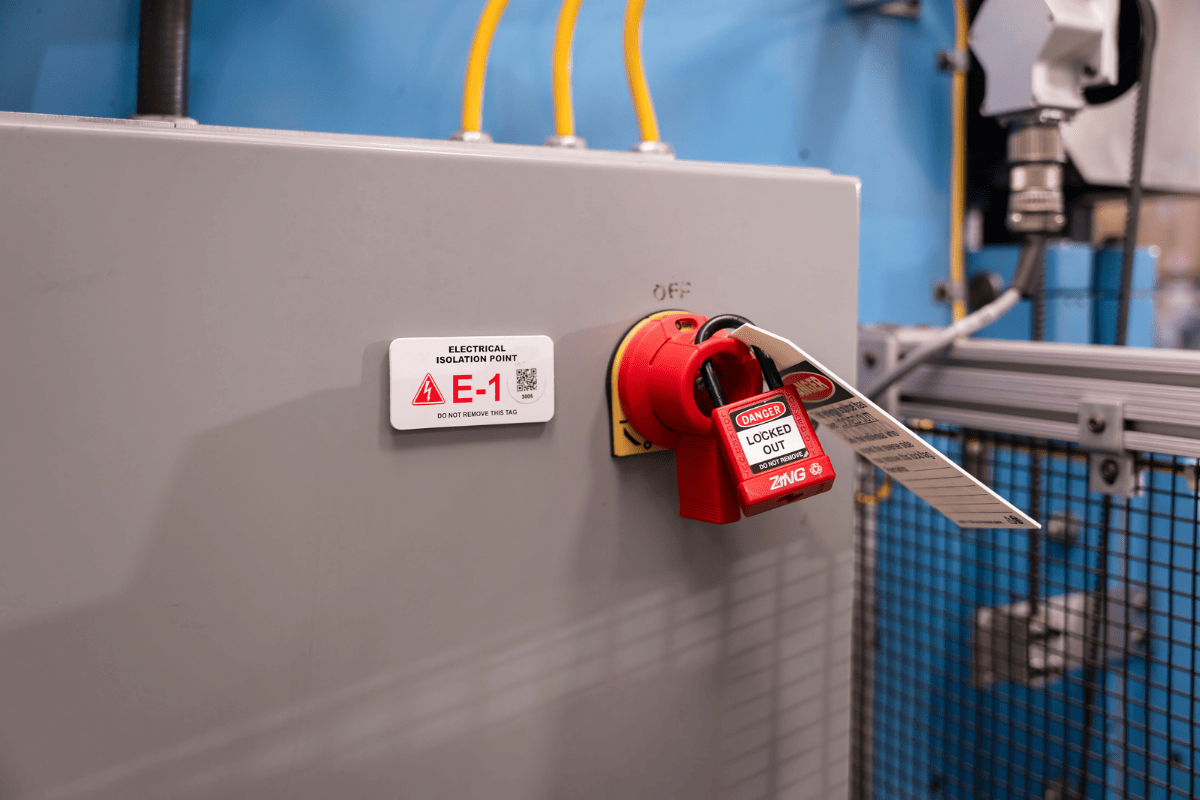
A photo shows: - Two padlocks on a main disconnect switch - Tags listing worker names and “Die Change in Progress” - Machine control panel dark (no power) - Safety interlock visibly disengaged
Used in monthly safety meetings to reinforce multi-person lockout rules.
2. Boiler Maintenance
Image captures: - Lock on fuel line valve - Tag with outage start time - Secondary lock on electrical feed - Technician in frame (PPE visible) for scale
Shared in the maintenance log as proof of compliance.
3. Conveyor System Isolation
Photo includes: - Lock on motor starter - Tag with QR code linking to full work permit - Nearby emergency stop button also tagged
Demonstrates layered safety controls—useful in cross-training sessions.
These aren’t perfect studio shots. They’re gritty, real, and recognizable. That’s what makes them effective.
Creating Your Own LOTO Visuals: A Practical Guide
You don’t need a professional camera. Most smartphones today capture sufficient detail.
Step-by-Step Setup
- Get approval from safety and operations leads.
- Schedule during maintenance windows—never interrupt live lockouts.
- Use natural lighting or a work light to eliminate shadows.
- Take multiple shots:
- - Wide angle: equipment in context
- - Mid-range: lock and tag with machine ID
- - Close-up: tag details and lock mechanism
- Review with team: Ask, “Would this prevent a mistake?”
Store images in a secure, searchable system. Name files clearly: LOTO_ConveyorLine3_MainMotor_20240415.jpg
Avoid cloud drives with weak access controls. These are compliance documents, not casual snapshots.
The Hidden Risk of Bad LOTO Imagery
Misleading or outdated photos create complacency. A worker sees a picture of a lock on a valve and assumes that’s the only step—ignoring electrical sources. This is called procedural drift: small deviations that compound into major incidents.
One refinery incident traced back to a training photo showing only a single lock. In reality, the pump required three isolation points. Technicians followed the visual, not the written procedure. Result: a pressurized release during servicing.
Visuals must reflect all required steps, not just the easiest one.
Checklist: Before
Using a LOTO Photo
- ✅ Is the equipment current and correctly labeled?
- ✅ Does the photo show all energy sources isolated?
- ✅ Is tag information readable and complete?
- ✅ Has it been reviewed within the last 12 months?
- ✅ Is it paired with a written procedure?
If any answer is no, don’t use it.
Final Thoughts: Make LOTO Visibility a Priority
A picture of lockout tagout on equipment is more than a training aid—it’s a cultural signal. It tells workers that safety is visible, valued, and verified. When done right, it reduces errors, strengthens compliance, and saves lives.
Start small. Take five clear photos this week of common machines during lockout. Share them in your next safety huddle. Watch how engagement shifts when people see their world reflected in the protocol.
Clarity prevents accidents. Document it. Show it. Repeat it.
Frequently Asked Questions
What should a lockout tagout photo include? A clear view of the lock and tag, readable tag details (name, reason, time), equipment ID, and proper isolation point.
Can I use stock images for LOTO training? Only if they match your actual equipment. Real site photos are always better for recognition and accuracy.
Are photos required by OSHA for lockout tagout? Not explicitly, but they’re strong evidence of training and compliance during audits.
How often should LOTO photos be updated? Annually, or immediately after equipment changes, relocations, or procedure updates.
Who should take LOTO photos? Trained safety personnel or supervisors during actual lockout events, never during live operations.
Can digital tags replace physical ones in photos? No. Physical locks and tags are required. Digital tags may supplement but not replace.
Should photos show workers? Only if consent is given and safety isn’t compromised. Focus on the equipment and lock point.
FAQ
What should you look for in Understanding Lockout Tagout Equipment Visuals? Focus on relevance, practical value, and how well the solution matches real user intent.
Is Understanding Lockout Tagout Equipment Visuals suitable for beginners? That depends on the workflow, but a clear step-by-step approach usually makes it easier to start.
How do you compare options around Understanding Lockout Tagout Equipment Visuals? Compare features, trust signals, limitations, pricing, and ease of implementation.
What mistakes should you avoid? Avoid generic choices, weak validation, and decisions based only on marketing claims.
What is the next best step? Shortlist the most relevant options, validate them quickly, and refine from real-world results.